




Abstract
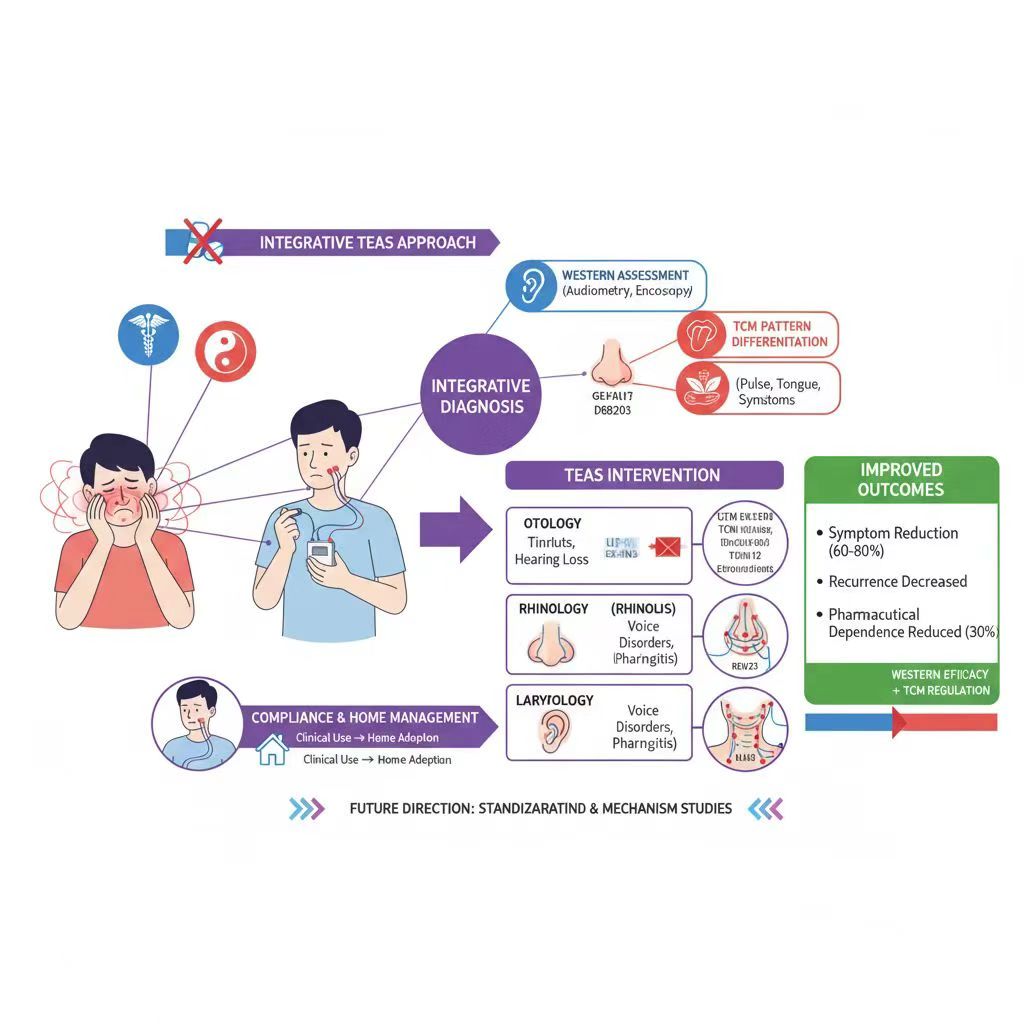
In order to treat diseases in the field of otolaryngology-head and neck surgery (OHNS), our research methodically investigates an integrative therapy model that blends Western medical techniques with Traditional Chinese Medicine (TCM). Our study demonstrates applications across multiple sub-specialties, including otology (sudden sensorineural hearing loss, chronic tinnitus), rhinology (allergic rhinitis, chronic cough), laryngology (refractory hiccups), and postoperative care. The key innovation lies in the systematic development and application of transcutaneous electrical acupoint stimulation (TEAS), which modernizes traditional acupuncture through non-invasive electrical stimulation, enhancing patient compliance and enabling home-based management. This integrative approach demonstrates significant practical value by synergizing Western medicine's targeted efficacy with TCM's holistic regulation, leading to improved clinical outcomes, reduced recurrence rates, and decreased reliance on pharmaceutical interventions. Future research should focus on standardizing TEAS parameters through multicenter randomized controlled trials and elucidating the underlying mechanisms using multi-omics technologies. Our research represents a paradigm shift toward personalized, evidence-based integrative medicine in OHNS, offering a comprehensive framework for enhancing patient care across acute and chronic conditions.
Keywords: Otolaryngology-Head and Neck Surgery, Traditional Chinese Medicine, transcutaneous electrical acupoint stimulation
Introduction
Otolaryngology-Head and Neck Surgery (OHNS) deals with a high burden of acute and chronic conditions, such as sudden sensorineural hearing loss (SSNHL), chronic subjective idiopathic tinnitus (CSIT), allergic rhinitis (AR), and chronic cough [1, 2]. Conventional Western medical treatments, while effective in many cases, often face limitations including suboptimal efficacy in certain patient subsets, drug side effects, high recurrence rates, and inadequate management of complex symptoms like chronic pain and cough hypersensitivity [3]. This gap between the clinical need for effective, sustainable management and the limitations of single-modality therapies presents a significant problem in the field [4, 5].
The primary objective of this research is to systematically describe and evaluate a unified clinical model that integrates Traditional Chinese Medicine (TCM) with Western medicine for the management of OHNS diseases. The specific research questions addressed are: How can TCM and Western medicine be synergistically combined across different OHNS sub-specialties [6]? What is the proposed mechanism and evidence for the efficacy of this integrative approach in improving patient outcomes, enhancing recovery, and reducing long-term sequelae?
This research is underpinned by a dual theoretical framework. It integrates Western medical pathophysiological models (e.g., inflammation, neural plasticity, epithelial barrier hypothesis) with core TCM principles (e.g., syndrome differentiation, meridian theory, and the regulation of qi and blood). The literature review incorporates key content from clinical guidelines and high-impact journals, citing studies on the "epithelial barrier hypothesis" in AR, the neurophysiological model of tinnitus, the immunomodulatory effects of glucocorticoids, and the mechanistic actions of biologic agents [7]. It also references research on the neuro-immunological effects of acupoint stimulation, establishing a scientific basis for the proposed integrative treatments.
Our study employed a systematic literature synthesis methodology. Data were collected through comprehensive searches of major academic databases, including PubMed, Web of Science, and the China National Knowledge Infrastructure (CNKI), using keywords related to OHNS diseases, TCM, acupuncture, TEAS [8], and specific herbal formulas like Yu Ping Feng San. The collected literature—encompassing clinical trials, experimental studies, and clinical practice guidelines—was analyzed qualitatively to identify common therapeutic strategies, proposed mechanisms of action, and reported clinical outcomes across the different disease entities [9, 10].
The synthesis of extant literature reveals several salient findings regarding the efficacy of integrated therapeutic approaches. The proposed integrative model demonstrates enhanced auditory recovery and attenuated residual tinnitus in SSNHL through phased interventions targeting distinct acute and chronic pathological processes [2]. Furthermore, it effectively manages CSIT and chronic cough via TEAS-mediated neuromodulation of central nervous system hyperactivity and inflammatory cascades [11]. Additionally, this approach achieves sustained symptomatic control and reduced recurrence rates in pediatric AR and OME (otitis media with effusion) through immunomodulatory mechanisms potentiated by herbal formulations and nutritional supplementation [12, 13]. Last but not least, the integrative protocol suggests potential amelioration of postoperative pain following sinonasal and cervical procedures, consequently diminishing requirements for opioid analgesics while supporting enhanced recovery pathways. Our proposed integrative TEAS model is schematically summarized in Graphical Abstract.
Otology Applications
Sudden sensorineural hearing lossSudden sensorineural hearing loss is an otologic emergency characterized by sudden impairment of the inner ear or auditory nerve [14]. Clinically, it often presents with sudden deafness, tinnitus, and aural fullness, with some patients also experiencing vertigo. SSNHL occurs rapidly within 72 hours (≤3 days) [15, 16]. The core pathophysiological mechanisms involve disturbances of inner ear microcirculation, viral infections, autoimmune reactions, and metabolic abnormalities. Current Western medical treatments mainly include corticosteroids, vasodilators, and agents that improve microcirculation, often supplemented by hyperbaric oxygen therapy. However, the efficacy of conventional Western approaches remains limited in a subset of patients, and sequelae such as residual tinnitus or persistent hearing loss are common [2]. Optimizing treatment strategies has therefore become a central focus in SSNHL research.
In our clinical practice, we have developed an integrated approach that combines TCM and Western medicine, applied in a staged manner across the acute and chronic phases. During the acute phase (within two weeks of onset), individualized TCM interventions are provided based on syndrome differentiation, including “wind-heat invasion”, “liver fire disturbance”, “phlegm-heat obstruction” and “blood stasis blocking the auditory orifice” [17]. These are treated with tailored herbal prescriptions and meridian-based acupuncture, administered alongside conventional pharmacological regimens. Beyond the standard interventions, a variety of additional approaches have been suggested for SSNHL management, including high-dose vitamin C, zinc [18], as well as alternative or complementary options like Chinese herbal medicine. Studies have demonstrated that Ginkgo biloba not only alleviates acute symptoms rapidly but also improves the overall rate of hearing recovery [19].
For patients with residual tinnitus or incomplete hearing recovery after acute treatment, our team has proposed a chronic rehabilitation strategy. Specific measures include (i) auricular root acupoint injection twice weekly, aimed at enhancing local circulation and neural repair. Intratympanic corticosteroid therapy is also indicated, especially when there is failure of conventional therapy and when the use of systemic corticosteroids should be avoided [20]. (ii) Acupuncture, which has been reported to improve local blood circulation and reduce coagulation in healthy subjects, thereby providing a theoretical basis for its use in SSNHL [21]. However, patient compliance is often limited by needle fear or discomfort. To overcome this, we developed a transcutaneous acupoint electrical stimulation device [13], targeting core acupoints such as Ting gong–Zhongzhu and Ting gong–Yifeng. This technique offers simplicity, comfort, and safety, ensuring both clinical efficacy and suitability for home-based, long-term management. (iii) Manual acupoint massage combined with herbal therapy, targeting pathological mechanisms such as qi stagnation, blood stasis, and meridian obstruction, further alleviates tinnitus and auditory dysfunction. These methods, which have already shown effectiveness in chronic tinnitus, highlight the potential of integrative approaches to not only improve acute-phase recovery rates but also reduce long-term sequelae during rehabilitation (Figure 1). Preliminary clinical observations and the synthesis of complementary evidence suggest that the integrative approach of TEAS + medicine may accelerate hearing recovery and improve overall rates compared to conventional regimens alone, though this requires validation in direct comparative RCTs [22].
Figure 1. Schematic of the integrative Transcutaneous Electrical Acupoint Stimulation (TEAS) in Otolaryngology-Head and Neck Surgery. The therapy integrates Western medical assessment with Traditional Chinese Medicine (TCM) pattern differentiation to guide personalized TEAS therapy. TEAS is applied to sub-specialty-specific acupoints for conditions in Otology (e.g., LI4, EX-HN3 for tinnitus), Rhinology (e.g., LI20 for rhinitis), and Laryngology (e.g., CV22 for pharyngitis). This synergy of Western efficacy and TCM regulation improves clinical outcomes (e.g., symptom reduction, lower recurrence), enhances patient compliance, and enables home-based management. Future goals include protocol standardization and mechanistic studies.
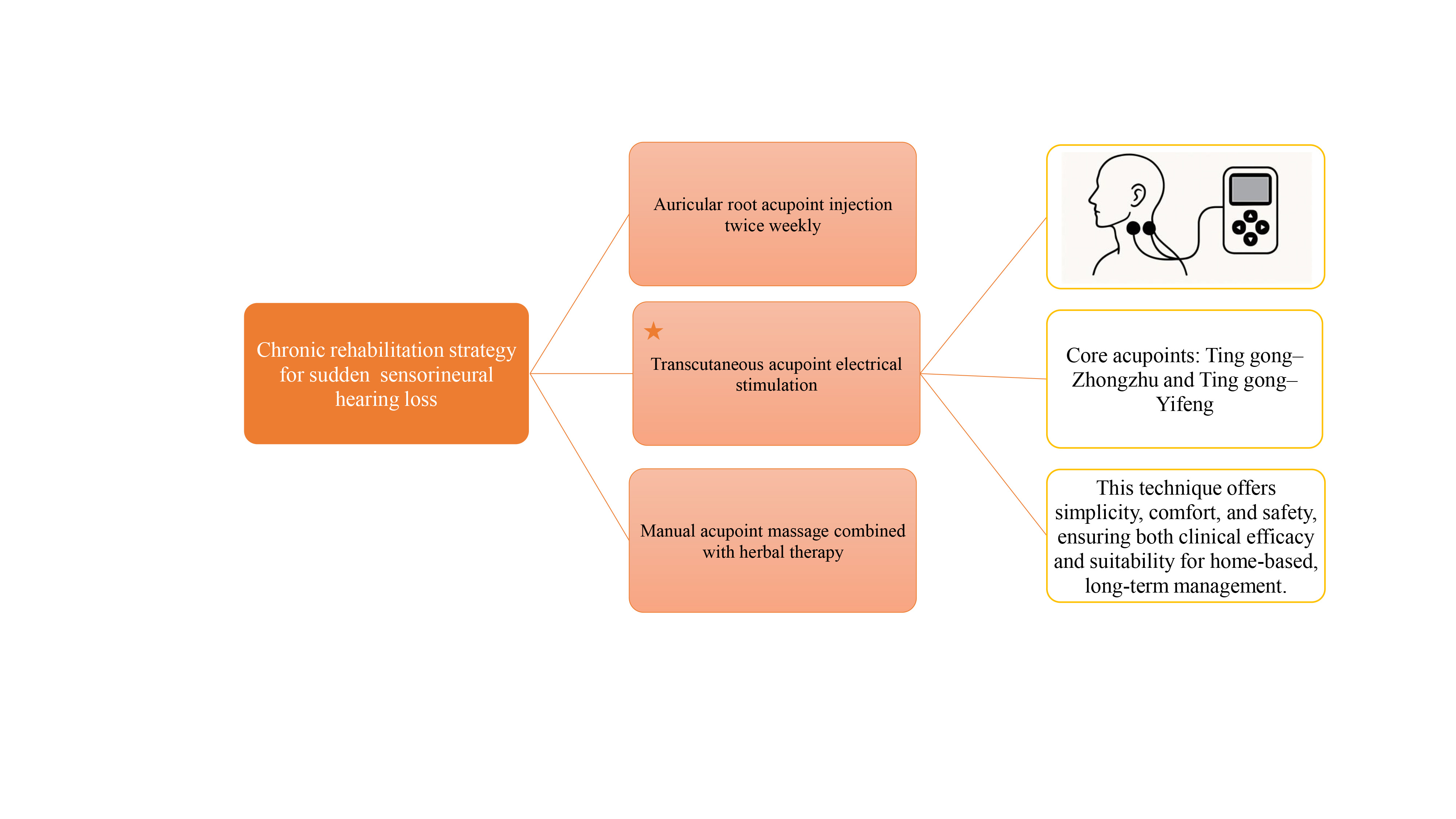
In conclusion, Western medicine provides rapid anti-inflammatory and circulatory support, while TCM interventions—including acupuncture, herbal therapy, transcutaneous stimulation, and local injection—contribute to systemic regulation and rehabilitation. Future multicenter randomized controlled trials are needed to further validate this integrative model and elucidate its mechanisms, ultimately supporting evidence-based individualized therapy for SSNHL. Continued research may help identify simpler and more effective treatment strategies, thereby improving the quality of life for patients with sudden hearing loss.
Chronic subjective idiopathic tinnitusTinnitus is the perception of sound in the absence of external acoustic stimuli [23, 24]. Chronic subjective idiopathic tinnitus is one of the most common and refractory disorders encountered in otology. Epidemiological studies report that tinnitus affects approximately 10% of the general population. More than 10%–15% of people in the world report a history of tinnitus. Among these, about 8% experience severe disturbances in sleep and work, and 0.5%–1% suffer from substantial impairment of daily life [25-27]. We appreciate the reviewer's meticulous suggestions, and due to an oversight on our part, we neglected to cite some references supporting this statement. According to your advice, we added corresponding modifications to the manuscript. Tinnitus is frequently associated with psychiatric comorbidities such as depression, anxiety, and insomnia, with more than 25% of patients presenting with concurrent anxiety and depression. However, as tinnitus is a symptom rather than an independent disease, its etiology is multifactorial, involving otology, neurology, and psychiatry [28]. Currently, objective evaluation methods are lacking, and while various treatment approaches exist, overall efficacy remains unsatisfactory.
From the TCM perspective, acupuncture treatment for tinnitus is based on syndrome differentiation [29]. Common syndromes include:
- Liver-fire disturbance: Patients present with irritability and anger; acupoints include Tinggong, Ermen, Yifeng, Zhongzhu, combined with Taichong and Xingjian.
- Phlegm-fire stagnation: Patients often experience chest tightness and bitter taste in the mouth; additional points include Fenglong, Neiting, and Waiguan.
- Kidney essence deficiency: Manifested by lumbar soreness, knee weakness, and nocturia; additional points include Shenshu, Ganshu, Guanyuan, and Sanyinjiao.
- Spleen-stomach weakness: Symptoms include fatigue and poor appetite; additional points include Pishu, Qihai, and Zusanli.
From the Western medical standpoint, the pathophysiology of tinnitus primarily involves abnormal spontaneous discharges of auditory nerve fibers and maladaptive central neural plasticity. Normally, spontaneous discharges of auditory fibers are synchronized and not perceived as sound by the brain. When pathological, synchrony is disrupted, and abnormal discharges are perceived as tinnitus. Similar to chronic pain, tinnitus involves abnormal persistent activation of neural circuits and central sensitization. Transcutaneous vagus nerve stimulation (tVNS), applied at either the auricular or cervical branch of the vagus nerve, has been adopted as a non-invasive alternative to invasive vagus nerve stimulation [30]. The main problem of patients with disturbing moderate or severe tinnitus is usually tinnitus related mental stress (TRMS) [31] and associated imbalance of the autonomic nervous system (ANS), leading to sympathetic prevalence and correspondingly reduced parasympathetic activity [32, 33]. Stimulation of specific auricular acupoints, including the posterior auricular point, peri-auricular points, and Shaoyang-related auricular sites, has demonstrated therapeutic potential for tinnitus. Evidence from experimental studies, supported by traditional Chinese meridian theory and anatomical correlations, indicates that the underlying mechanism may be linked to vagus nerve modulation [34].
To address these challenges, our team developed a transcutaneous acupoint electrical stimulation device. This method targets auricular and related acupoints to modulate spontaneous neural activity and improve central auditory pathway dysfunction. When combined with TCM-based acupoint selection, it further regulates liver, kidney, spleen, and stomach functions. Transcutaneous electrical nerve stimulation (TENS), a well-established non-invasive electrotherapy, activates sympathetic inhibitory neurons and suppresses parasympathetic excitatory neurons, and is widely applied in pain management. By integrating this approach with TCM theory, invasive acupuncture can be substituted by non-invasive surface electrical stimulation at acupoints such as Tinggong, Yifeng, and Zhongzhu. This method avoids complications such as infection, greatly reduces patient discomfort, and allows home-based treatment [35].
The mechanism of this integrated approach lies in the complementary strengths of both systems: Western medicine rapidly improves cochlear blood flow and neural metabolism. TCM acupuncture and herbal therapy regulate systemic qi and blood, while electrostimulation and sound therapy modulate central plasticity. Psychological interventions further improve emotional responses and sleep quality. A multi-dimensional, multi-level intervention not only enhances treatment efficacy but also improves patient compliance.
In conclusion, an integrated Chinese and Western medicine therapy for CSIT compensates for the limitations of monotherapy. By combining innovative non-invasive electrostimulation with comprehensive multimodal management, this approach provides a novel model for clinical practice and warrants further research and broader application.
Otitis media with effusionOtitis media with effusion is a common pediatric disease characterized by middle ear effusion and conductive hearing loss, which may impair speech and learning [36]. Its occurrence is associated with eustachian tube dysfunction and adenoid hypertrophy as mechanical factors [37], while allergic rhinitis and IgE sensitization also increase the risk [38, 39]. Elevated IL-4 and IL-5 levels with decreased IFN-γ have been detected in effusions, and the inflammatory profile is similar to that of the nasopharynx, consistent with the “unified airway” hypothesis [40]. In addition, elevated levels of PAF and HMGB1 and their correlation with Th1/Th2 imbalance suggest that immune dysregulation plays a central role in pathogenesis [41].
Current management strategies mainly include watchful waiting, tympanostomy tube insertion, and adenoidectomy. Pharmacological interventions such as antibiotics, antihistamines, and corticosteroids show limited efficacy and are not recommended for long-term use [42]. Therefore, an integrated approach combining Western and traditional Chinese medicine is particularly important for the treatment of pediatric OME.
In our department, patients are treated in a stepwise manner. In the first phase (1 week), oral corticosteroids are combined with topical nasal steroids and ophthalmic drops; antibiotics are added if indicated. Vitamin D and calcium supplementation are prescribed concurrently, together with the Chinese patent medicine Yu-Ping-Feng San. In the second phase (1 month), nasal steroid sprays are continued in combination with loratadine syrup, cetirizine drops, or montelukast chewable tablets, along with vitamin D, calcium, and Yu-Ping-Feng San. After two weeks of sequential treatment, approximately 89.71% of patients exhibited the following changes: (1) The air-bone gap in pure-tone audiometry shifted from “>20 dB” to “≤20 dB”; (2) Tympanic membrane color changed from amber to normal (translucent grayish-white); or (3) Tympanograms returned from Type B to Type C or Type A. These findings indicate a marked improvement in the patients' symptoms of secretory otitis media [43].
Vitamin D deficiency has been suggested to be associated with the occurrence and persistence of OME. Through immunomodulation, vitamin D suppresses inflammation and enhances antimicrobial defense. Clinical evidence further suggests that supplementation may reduce the incidence of acute otitis media in children with recurrent OME [44]. Yu-Ping-Feng San, which is traditionally used for “reinforcing qi to secure the exterior, tonifying the lung and spleen, and expelling pathogens,” has been applied for recurrent pediatric cases. Case reports have shown that after treatment with modified Yu-Ping-Feng San, tympanogram patterns normalized, hearing improved, and no recurrence was observed during follow-up [45]. Data mining analyses revealed frequent use of herbs such as Astragalus membranaceus, Asarum sieboldii, and Scutellaria baicalensis, highlighting the combined principle of strengthening the spleen-lung system and eliminating pathogens [46]. Modern pharmacological studies further indicate that active compounds, including wogonin and decursin, act on EGFR, MAPK1, and AKT1 signaling pathways, downregulate IL-4, IL-5, IL-13, and IgE, restore Th1/Th2 balance, and attenuate inflammation [47].
In summary, both vitamin D and Yu-Ping-Feng San exhibit therapeutic potential for pediatric OME through immunoregulatory mechanisms. The former enhances anti-inflammatory and antimicrobial responses, while the latter reduces recurrence via holistic regulation. However, most current studies are limited to small samples or case observations. The optimal dosage and long-term safety of vitamin D supplementation remain uncertain, and the clinical evidence for Yu-Ping-Feng San is still insufficient. Future multicenter, large-scale studies are warranted to evaluate their individual or combined effects and to develop more precise and personalized treatment strategies for children with OME.
Rhinology Applications
Allergic rhinitis other pathogenesis exploration and treatmentAllergic rhinitis is a non-infectious chronic inflammation of the nasal cavity mediated immunoglobulin E (IgE), characterized by sneezing and a large amount of clear nasal discharge as the main clinical manifestations. It affects more than 20%-30% of the global population and more than 300 million patients in China [48, 49]. Akdis [50] proposed the "epithelial barrier hypothesis" to the occurrence and development of allergies and chronic diseases, providing a new perspective for understanding allergic rhinitis. Nasal epithelial barrier refers to the collection of nasal mucosal epithelium itself and its secretory function and immune function. It includes nasal epithelial cells and cell junction structures, mucus and antimicrobial secretions, and cells and cytokines in the mucosa. It is the first line of defense against the outside world. Normal epithelial mucosa can clear the allergens and pollutants attached to the nasal cavity through mucus secretion and ciliary movement, and transport them to the esophagus or cough them out of the body in the form of sputum. The epithelial barrier is a complex concept involving immunity, genetics, microbiology and other fields. It is not only the first line of defense against pathogens, but also an important guarantee to regulate immunity and prevent autoimmune diseases. Glucocorticoids (GC) [51, 52] are listed as first-line drugs because of their extensive and comprehensive anti-inflammatory and anti-allergic effects, and they also play a significant role in restoring barrier function. Experiments show that after continuous use of nasal GC for 1 year, the function of the epithelial barrier of nasal mucosal cells in AR patients has been significantly restored in vitro. Studies have shown [53-56] that GC can inhibit the degranulation of mast cells, and high concentrations of GC can inhibit the growth and activation of B lymphocytes and effectively inhibit the pathological process of AR. Application of dupumab or tezepelumab on the basis of desensitization therapy can effectively regulate the inflammatory gene transcriptome or relieve nasal symptom scores in AR patients; Studies have reported that dupilumab can reduce the serum IgE level in AR patients and relieve allergic symptoms. Mepolizumab can effectively restore the TJ structure of nasal epithelium by inhibiting IL-5.
Chronic cough treatmentChronic cough is a clinical syndrome characterized by cough hypersensitivity. Common causes in modern medicine include cough variant asthma, upper air cough syndrome, eosinophilic bronchitis, gastroesophageal reflux disease, and allergic cough and others. In the category of traditional Chinese medicine, cough belongs to "long-term cough" and "stubborn cough" [57]. Nowadays, there are many treatment methods, such as acupoint paste therapy acupoint injection, traditional Chinese medicine heat bag acupoint paste therapy, massage therapy, meridian cupping method; in recent years, TEAS has been applied to the treatment of chronic cough; it is a non-invasive acupoint electrical stimulation treatment that combines transcutaneous nerve electrical stimulation with Chinese acupoints [8, 58, 59]. As a new treatment technology derived from the modern development of acupuncture, it has the advantages of non-invasiveness and comfort. Studies have shown [8, 58, 59] that transcutaneous electrical stimulation of acupoints can regulate the autonomic nervous system, and by exciting A nerve fibers, it can release endogenous enkephalins and endorphin substances in the brain, and regulate the release levels of multiple factors such as prostaglandins, 5-hydroxytryptamine, interleukin, P substance and TNF-α to achieve analgesic effects. TEAS can also reduce the incidence of T-α and IL-6 inflammatory cytokines, to achieve the effect of improving microcirculation and alleviating inflammation. Modern studies [60, 61] show that the Touqi point is the confluent point of the Ren and Yinwei Meridians, and needling this point can reduce phlegm and ventilate the lung, benefiting pharynx and opening the orifices. The Yongquan point is a point of the Foot-Yangming Stomach Meridian, and is the place where pulse qi originates, and is connected with the Kidney Meridian, Spleen Meridian, Liver Meridian, Heart Meridian, Chong Meridian, Ren Mer, Yin Yang Qiao Meridian and others. Needling this point can clear the pharynx and ventilate the diaphragm, dissipating and resolving masses. At present, it has been clinically proven that the Yongquan point and the Toulinqi point have a very good effect on the treatment of chronic pharyngitis, hoarseness, laryngopharyngeal reflux, pharyngalgia, and chronic cough, and are commonly used acupoints for the treatment of pharyngeal diseases.
Allergic rhinitisAllergic rhinitis is one of the most prevalent chronic nasal disorders in children, typically manifested by nasal obstruction, sneezing, rhinorrhea, and itching, and is frequently accompanied by adenoid hypertrophy (AH), leading to obstructive sleep apnea, recurrent otitis media, and growth impairment [62, 63]. Single-center data suggest that approximately one-third of children with AH also suffer from AR, and the two conditions are significantly correlated [64]. And AR can aggravate adenoid hypertrophy through the release of inflammatory mediators and local immune imbalance [65, 66]. The core pathology involves mucosal immune dysregulation dominated by Th2/ILC2 responses, elevated IgE, and microbial dysbiosis, which synergistically drive chronic inflammation and adenoidal hypertrophy [67, 68].
Conventional management includes pharmacotherapy for mild cases, whereas moderate to severe AH with AR often requires adenoidectomy combined with anti-allergic medications (8). Nevertheless, postoperative recurrence remains common, and allergen immunotherapy has been shown to reduce recurrence risk but does not fundamentally correct immune imbalance or barrier dysfunction [68-70].
In our department, children are treated with a standardized stepwise regimen. The first course (1 week) includes oral corticosteroids combined with intranasal corticosteroid drops, supplemented with ophthalmic drops; antibiotics are prescribed when necessary, along with vitamin D and calcium supplementation, and the addition of the Chinese patent medicine Yu Ping Feng San (YPFS). The second course (1 month) is adjusted to intranasal corticosteroid sprays, combined with loratadine syrup, cetirizine hydrochloride drops, or montelukast sodium chewable tablets, while continuing vitamin D, calcium, and YPFS. Before treatment, at the end of the first treatment cycle (1 week), and at the end of the second treatment cycle (1 month), patients' nasal congestion symptom scores and other ratings were collected with Carlos O'Connor-Reina's parent questionnaire [71]. For nasal congestion symptom scores, we performed t-tests to compare scores before treatment versus after 1 week of treatment, and before treatment versus after 4 weeks of treatment. After two treatment cycles, patients' nasal symptom scores were consistently lower than the control group, with all differences being statistically significant (P<0.05). This indicates effective control of allergic inflammation in the upper and lower respiratory tracts and significant improvement in allergic rhinitis symptoms [72]. Nasal ventilation was significantly enhanced, nasal drainage became unobstructed, and secretions were reduced, thereby alleviating the persistent inflammatory stimulation of the adenoids and resulting in gradual relief of clinical symptoms. YPFS, a classical Chinese herbal formula, exerts effects described as “reinforcing qi and consolidating the exterior.” Modern studies have demonstrated that YPFS corrects Th1/Th17 imbalance by reducing IL-17A and IL-22 while upregulating IL-2 and IFN-γ, and simultaneously downregulates IgE and eosinophils [73]. Its bioactive constituents, including polysaccharides and flavonoids, possess immunomodulatory and anti-inflammatory properties. Clinical and experimental trials indicate that YPFS and its derivatives (nasal sprays, drops) alleviate nasal symptoms, improve quality of life, and reshape intestinal microbiota by enhancing beneficial genera such as Lactobacillus and Bifidobacterium [74-76].
From a mechanistic perspective, the traditional concept of “deficiency of exterior defense” parallels the modern notion of epithelial barrier dysfunction. YPFS may not only strengthen host defense but also interfere with the IL-33/ST2/ILC2 signaling pathway, which is highly activated in AR with AH [77]. Additionally, based on the immune regulation theory, the reduction in regulatory T cells and memory B cells observed in the adenoids of multiple-sensitivity children may indicate potential targets for YPFS modulation [68].
However, current evidence is limited by small sample sizes, single-center studies, and short follow-up durations. Long-term efficacy and relapse prevention remain uncertain. Future directions should focus on multicenter randomized controlled trials integrating traditional Chinese medicine and modern immunology, coupled with multi-omics analyses, to elucidate the “adenoid–nasal–gut” immune axis and provide robust evidence for the clinical application of YPFS in pediatric AR with AH.
Postnasal Drip Syndrome (PNDS)Postnasal drip (PND) is not a distinct syndrome but rather a common symptom of various nasal and sinus conditions. When evaluating patients with sinus disorders, PND is frequently observed. It may occur independently in the absence of sinus issues or manifest as part of pharyngeal reflux symptoms [78]. The symptoms such as increased nasal discharge and repeated cough have caused serious trouble to the quality of life and work of rhinitis patients. There is an urgent need for a simple and effective treatment to relieve and control it clinically.
PND is particularly common in patients with chronic rhinitis and sinusitis, with 87% of patients with nasal polyps reporting this symptom, with an average distress score of 6.5 (range 0-10) [79]. In clinical studies, the severity is often quantified by a patient-reported scale (e.g., PND score) and correlates with chronic cough, total nasal symptoms score (rTNSS), and quality of life (e.g., MiniRQLQ) [80, 81].
The main pathological features of postnasal drip syndrome (PNDS) are thought to be related to the dysfunction of the normal mucous clearance mechanism, which is manifested by abnormal accumulation of mucus in the posterior part of the nasal cavity, but its exact pathophysiological mechanism is not clear [78]. In the context of chronic rhinosinusitis (CRS), the syndrome is often accompanied by glandular morphological changes [82]. In addition, pathologic features associated with nasal polyps, including eosinophilic infiltration, goblet cell hyperplasia, glandular hyperplasia, squamous epithelial metaplasia and fibrin deposition, can further exacerbate mucus dynamic disturbances and correlate with symptom severity [83].
The combined therapy of Zusanli injection and acupuncture of the sphenopalatine ganglion (SPGA) for PNDS is a novel approach integrating traditional Chinese and Western medical theories. This innovative treatment alleviates symptoms by regulating the parasympathetic nervous system, modulating multi-target pathways, and coordinating neuro-endocrine-immune networks in patients with posterior rhinorrhea.
The sphenopalatine ganglion, located within the pterygopalatine fossa, is the second branch of the trigeminal nerve (mandibular division). This critical autonomic ganglion serves as a convergence point for parasympathetic nerves, sympathetic nerves, and trigeminal sensory fibers. These neural pathways work together to regulate blood flow, secretions, and sensory functions in the nasal mucosa [84]. In the state of rhinitis, the imbalance of autonomic nerve activity (such as excessive activity of parasympathetic nerves) leads to the dilation of blood vessels in the nasal mucosa, high vascular permeability, and increased gland secretion, thus causing nasal congestion and runny nose [85]. Therefore, SPG becomes the target site for modulating these symptoms. Direct stimulation of the sphenopalatine ganglion (e.g., SPGA) has been used as an emerging therapy for allergic rhinitis. By activating specific ganglia, allergic rhinitis symptoms can be rapidly alleviated and recurrence reduced. The combination of acupuncture and Chinese medicine may bring better results for allergic rhinitis [86, 87]. Although the specific molecular mechanism is not clear, SPGA may exert an anti-inflammatory effect through multiple target pathways and reduce nasal mucosal inflammation [86].
Nasal discharge is mainly caused by excessive gland secretion mediated by the parasympathetic nerve, which can be regulated by stimulating the SPG. The SPG contains parasympathetic nerve fibers that control the secretion of the nasal mucosal glands [78, 88]. In the treatment of rhinitis, chemical stimulation methods (e.g., capsaicin) have been explored for SPG to reduce the parasympathetic nerve output and thus reduce secretory activity [89]. Similarly, by stimulating the sphenopalatine ganglion to modulate the trigeminal-autonomic reflex, gland secretion can be reduced and rhinorrhea relieved, thus relieving the symptoms of postnasal drip syndrome.
Zusanli (ST36), a vital acupuncture point in Traditional Chinese Medicine, is located three cun (approximately four finger-widths) below the Dubi acupoint (the depression on the outer side of the knee) on the front and outer side of the lower leg. Situated one xiang (about half a finger width) lateral to the anterior tibial crest, this point belongs to the Foot-Yangming Stomach Meridian. As a key acupoint for spleen tonification and qi enhancement, it helps boost the body's immune system. In traditional medicine, ST36 has been widely used to regulate digestion, immune function, and inflammatory responses [90, 91].
However, the molecular immune mechanism of acupuncture on the pterygopalatine ganglion combined with bilateral Sanli acupoint injection in the treatment of rhinitis patients is not clear at present. In the future, we hope to have more research experiments to explore it deeply and seek a simpler and more effective treatment method, so as to improve the quality of life of rhinitis patients.
Management of nosebleeds (children, adults)The typical features of pediatric epistaxis are scanty in amount, intermittent, spontaneous, and usually not accompanied by trauma, nasal congestion, or dyspnea [92-94]. Adult epistaxis is a more frequent and severe an episode of nasal bleeding. It is characterized by higher rates (compared to children), frequent recurrence (recurrent episodes), and possible systemic symptoms (such as behavioral changes or impact on the quality of life). For example, adult nosebleeds can be spontaneous events that persist for years (e.g., 8-year history of recurrence), but are more likely to be associated with anticoagulation therapy or genetic disorders, resulting in significant differences in bleeding severity [95, 96].
There are significant pathological differences between pediatric and adult epistaxis, primarily associated with genetic factors, vascular malformations, and treatment effects. The most common cause of epistaxis is vascular abnormalities (such as telangiectasia), particularly in patients with hereditary hemorrhagic telangiectasia (HHT) [97]. Anticoagulant therapy (e.g. warfarin, rivaroxaban) was also frequently reported as a trigger for nosebleeds because it increases bleeding risk, particularly in patients with atrial fibrillation [98].
In treating adult epistaxis, clinicians typically begin by locating and stopping the bleeding site, while combining anti-reflux medications with antihistamines. Hypertensive patients should also maintain strict blood pressure control in their daily routines. Traditional Chinese Medicine practitioners employ acupoints like Zusanli (ST36) and Yongquan (KI1), guiding the downward flow of fire energy through integrated Western medical treatments to alleviate symptoms.
Pediatric epistaxis is often associated with spleen and stomach dysfunction. Through syndrome differentiation and treatment analysis, combined with pediatric constitution and environmental factors, this condition typically stems from irregular digestive functions and impaired qi movement in the spleen and stomach. Treatment strategies include: For stomach heat conditions, focus on purging fire to stop bleeding; For spleen deficiency cases, emphasize spleen tonification, qi enhancement, blood nourishment, and restoration of normal digestive functions. When combined with topical medications, these approaches can effectively alleviate nasal bleeding symptoms [99].
Studies have shown that Yupingfeng granules can relieve the symptoms of rhinitis in patients with lung qi deficiency and cold type [75]. Yupingfeng Granules, a classic TCM formula for tonifying qi and consolidating the exterior, are widely used in treating various respiratory diseases. Children's weaker constitutions and underdeveloped organ functions often lead to deficiencies in lung and spleen functions. When lung qi becomes deficient, it weakens the body's defenses, potentially triggering allergic symptoms such as nasal congestion, runny nose, nosebleeds, and atopic dermatitis [100].
Yupingfeng Granules are formulated from the traditional Chinese medicine classic Yupingfeng San, containing three key ingredients: Saposhnikovia divaricata (for dispelling wind and resolving dampness), Astragalus membranaceus (for tonifying qi and consolidating the exterior to strengthen the triple burner), and Atractylodes macrocephala (for nourishing the spleen, benefiting the stomach, drying dampness, and cultivating earth to calm wind). While Saposhnikovia excels at expelling wind pathogens, its combination with Astragalus enhances exterior-strengthening effects, boosting the body's natural defenses. The addition of Atractylodes further stabilizes internal organs and strengthens their supportive functions [101]. For patients with allergic rhinitis, Yupingfeng granules can disperse wind and expel evil externally and supplement spleen and benefit lungs internally. Combined with other western medicine treatments, the therapeutic effect can be effectively improved and the clinical symptoms of patients can be alleviated.
However, this treatment approach also has certain limitations. Since each patient's constitution varies, it is not advisable to blindly combine traditional Chinese medicine with Western medicine. Adjustments must be made according to individual physical conditions. Current foundational research on Yupingfeng Granules and TCM acupoint therapy for epistaxis still requires further exploration. In the future, we hope to see more studies on the mechanisms of integrated TCM-Western medicine treatments for allergic rhinitis and epistaxis, providing stronger clinical evidence to support treatment strategies.
Integrative Pain Management for Postoperative Care in Nasal and Sinus SurgeryPostoperative pain following functional endoscopic sinus surgery (FESS) is a primary patient complaint, significantly impacting recovery and quality of life [102, 103]. While FESS is a minimally invasive technique, the inflammatory response to surgical trauma and the use of nasal packing often cause moderate to severe pain, headaches, and sleep disturbances [102-104]. Conventional pain management frequently relies on opioids, which carry risks of side effects such as nausea and vomiting, as well as the potential for dependency [105, 106]. An integrative approach combining modern medical practice with TCM, specifically TEAS and acupuncture, offers a safe and effective strategy to enhance analgesia and reduce opioid consumption [103, 107].
The proposed integrative protocol involves TEAS applied to the local acupoint Yintang (EX-HN3) and the crucial distal point, bilateral Hegu (LI4) [103, 108]. This is supplemented by traditional needle acupuncture at a combination of potent distal points: Dabai and Linggu (often used together for powerful analgesia) [109, 110], Chasan (used for facial neuralgia) [111], and Taichong (LR3). The combination of Hegu and Taichong is known in TCM as the 'Four Gates,' which powerfully regulates systemic circulation and provides analgesic effects [112]. This protocol strategically combines local stimulation to address sinus-specific pain with potent distal points to modulate the body’s overall pain response.
The mechanisms underpinning this therapy are supported by a growing body of modern research.
Central Nervous System Modulation: Stimulation of Hegu (LI4) and Taichong (LR3) has been shown via fMRI and fNIRS to modulate activity in large-scale brain networks, including the somatosensory cortex and frontoparietal network, thereby altering pain perception and processing [109, 112].
Neuro-Hormonal and Anti-Inflammatory Regulation: TEAS and acupuncture trigger the release of endogenous opioids like β-endorphin and regulate neurotransmitters, which are key to the body's natural pain-relief system [113, 114]. This directly contributes to reduced pain scores and a lower requirement for opioid rescue medication post-surgery [102, 103, 107, 113]. Furthermore, this stimulation can mitigate the postoperative stress response by regulating the hypothalamic-pituitary-adrenal (HPA) axis and downregulating pro-inflammatory cytokines, reducing local inflammation and swelling [108, 114].
Improved Overall Recovery: Randomized controlled trials on post-ESS patients confirm that this approach not only decreases pain scores but also significantly improves sleep quality, stabilizes intraoperative hemodynamics, and reduces the need for rescue analgesia [102, 103]. This aligns with findings from other surgeries where TEAS has been shown to enhance the overall quality of recovery [108].
A primary limitation of acupuncture research is the challenge of designing effective sham controls [115]. However, the outlook for this integrative therapy is exceptionally promising. It provides a non-pharmacological, low-risk adjunct that aligns with enhanced recovery after surgery (ERAS) principles outlined in clinical guidelines [107, 116]. By effectively managing pain and reducing reliance on opioids, it enhances patient comfort, shortens recovery time, and improves overall surgical outcomes.
Laryngology Applications
Integrated Traditional Chinese and Western Medicine Treatment for Non-Neoplastic Throat Diseases with a Focus on Electroacupuncture StimulationAcupoint electrical stimulation (AES), a novel integrative therapy combining traditional Chinese acupuncture theory with modern electrical stimulation technology, has gained increasing attention in recent years for the management of non-neoplastic throat disorders such as pharyngitis, throat pain, globus sensation, pharyngeal dryness, and hoarseness [8].
Throat diseases are highly prevalent in clinical practice, particularly during seasons of frequent upper respiratory tract infections and in populations exposed to air pollution or tobacco [117]. Their core pathophysiology commonly involves mucosal inflammation (edema, hyperemia, excessive secretions), epithelial damage, heightened neural sensitivity, and impaired local blood circulation [118]. Conventional Western medical treatments—such as anti-inflammatory agents (NSAIDs, corticosteroid sprays or gargles), antibiotics, voice rest, and hydration—remain first-line options, but often show limited efficacy in recurrent or chronic cases and are associated with adverse effects or drug resistance.
Within the framework of traditional Chinese medicine, AES emphasizes the regulation of “meridian–qi–blood” dynamics. Stimulation of specific acupoints is believed to regulate meridian flow, restore balance, and enhance immune function. TEAS, as a non-invasive form, exerts its therapeutic effects through multiple biological pathways [119]. Studies have shown that TEAS promotes the release of inhibitory neurotransmitters, thereby reducing central neuronal sensitivity [120]; induces the release of endogenous opioids in the brain and spinal cord, activates adrenergic mechanisms, and downregulates pronociceptive substances such as substance P, resulting in significant analgesia [121]. In addition, TEAS suppresses the secretion of proinflammatory cytokines, improves local blood circulation, accelerates the resolution of inflammatory edema, and exerts systemic anti-inflammatory effects. It also modulates immune function, enhancing lymphocyte transformation [122]. In sports medicine, TEAS has been reported to alleviate exercise-induced fatigue by scavenging free radicals, inhibiting lipid peroxidation, and regulating creatine kinase activity [123]. Owing to its analgesic and anti-inflammatory properties, TEAS has also been incorporated into perioperative management, where it reduces opioid consumption and related side effects while stabilizing hemodynamics, mitigating stress responses, and attenuating inflammation during surgery or anesthesia [124, 125].
In our clinical practice, AES is typically administered in repeated sessions of approximately 30 minutes, scheduled twice daily (morning and evening), for a duration of 2–4 weeks per treatment course. Acupoint selection is symptom-specific: for patients with laryngopharyngeal reflux, common points include Tiantu (CV22), Tianrong (SI17), Lianquan (CV23), Renying (ST9), and Neiguan (PC6); for those without reflux, Tiantu and Renying are primarily selected. Stimulation intensity is adjusted to the patient’s tolerance, ensuring perceptible yet comfortable sensations, with frequency parameters individualized according to patient response. For voice fatigue, patients are assessed pre- and post-treatment using the Voice Handicap Index (VHI) and Vocal Fatigue Index (VFI) (comprising three components: voice avoidance score, physical symptom score, and symptom improvement after rest), and the Grade, Roughness, Breathiness, Asthenia, Strain (GRBAS) scale for hoarseness severity. After 8 weeks of treatment, significant differences were observed in the VHI and VFI-3 scores (P<0.05). Clinical observations indicate that AES therapy demonstrates significant efficacy in treating laryngopharyngeal reflux, vocal cord polyps, leukoplakia, and vocal fatigue. Specifically, AES reduces patients' Vocal Fatigue Index scores. Compared to traditional therapies, AES effectively alleviates pharyngeal symptoms, particularly the “symptom improvement after rest” score within the VFI, and accelerates recovery from hoarseness [126]. Nevertheless, several limitations remain. High-quality randomized controlled trials (RCTs) are scarce, particularly those incorporating blinding or sham controls. Standardization of stimulation parameters (frequency, intensity, waveform, acupoint combinations) and investigation of dose–response relationships are lacking. Long-term follow-up data on outcomes and recurrence rates are limited, and some patients experience poor tolerance or discomfort from skin electrode stimulation.
Looking forward, future research should emphasize multicenter RCTs integrating traditional and modern approaches, standardization of stimulation protocols, and the inclusion of objective biomarkers (e.g., mucosal inflammatory mediators, neural sensitivity indicators, imaging) to elucidate mechanisms. Stratification of patient subgroups (e.g., acute vs. chronic pharyngitis, concurrent vocal cord pathology) will be essential to optimize individualized treatment strategies.
Refractory hiccupsRefractory hiccups after pharyngolaryngeal head and neck surgery (lasting for more than 48 hours and unresponsive to conventional treatments) are a difficult problem affecting patients' postoperative recovery. Symptoms can be improved through an intervention strategy of electrical acupoint stimulation at Zusanli (ST36) combined with Tiantu (CV22).
Core Pathology of Refractory Hiccups After Pharyngolaryngeal Head and Neck Surgery: Hiccups are a symptom characterized by involuntary contractions of the diaphragm and intercostal muscles, which cause sudden inspiration and glottal closure [127]. This is accompanied by audible sounds in the throat—these sounds are short and occur frequently, and the symptom cannot be controlled voluntarily by the patient [128]. The etiologies are mainly divided into three categories: first, surgical manipulation that stimulates the diaphragm, stomach, and other organs; second, the effects of anesthetic drugs, airway management, and anesthetic techniques [129]; third, patient-related factors such as a relevant medical history, insufficient preoperative fasting, renal insufficiency, or diseases of the digestive system and other systems [130]. Postoperative hiccups have a significant impact on wound healing of head and neck surgeries and the stability of hemodynamics, endangering patients' health.
Mechanism of Action of Electrical Stimulation at Zusanli (ST36) Acupoint: As a Lower He-Sea Point of the Stomach Meridian of Foot-Yangming in TCM, this acupoint has the effects of regulating the spleen and stomach, harmonizing stomach qi, and descending adverse qi. It can regulate the qi and blood of the Stomach Meridian and calm the stomach qi, thereby relieving hiccups [91]. The anatomical location of Zusanli is closely associated with nerve distribution. Acupuncture at Zusanli can stimulate local nerves and regulate the central nervous system through neural reflexes—particularly targeting the hiccup centers in the brainstem and medulla oblongata—so as to inhibit the abnormal excitation of the hiccup reflex arc [131].
Mechanism of Action of Electrical Stimulation at Tiantu (CV22) Acupoint: Located in the center of the suprasternal fossa, Tiantu (CV22) is an acupoint of the Conception Vessel (Ren Meridian) [132, 133]. It has the effects of relaxing the chest, regulating qi, descending adverse qi, and relieving vomiting. It can regulate the flow of qi, thereby alleviating symptoms such as hiccups, cough, and asthma caused by upward reversal of stomach qi or unsmooth flow of qi. From the perspective of modern medicine, Tiantu is situated in the neck, adjacent to the trachea, pharynx, and esophagus [133]. Stimulation of Tiantu (CV22) may regulate the motor function of the diaphragm through neural reflexes, thus helping to relieve hiccups caused by diaphragmatic spasm [132].
Postoperative Neck Patient Applications
An Integrative Approach to Pain Management Following Neck Surgery Utilizing Transcutaneous Electrical Acupoint Stimulation and AcupuncturePostoperative pain following major neck surgeries, particularly for head and neck cancers, remains a significant clinical challenge that is often inadequately managed. Studies show that a high prevalence of pain persists even with narcotic-based regimens, with many patients experiencing moderate to severe pain post-surgery [134]. The core pathology is complex, involving intense nociceptive pain from surgical trauma and a neuropathic component from inflammation or nerve compression. These factors can impede functional recovery, trigger immunosuppression, and prolong hospitalization [134, 135].
A novel therapeutic regimen integrates TEAS with traditional acupuncture. TEAS is applied non-invasively to the local acupoint Tianrong (SI17), located on the neck, and the distal anti-inflammatory acupoint Hegu (LI4). This is complemented by needle acupuncture at powerful distal analgesic extra points: Dabai (LI4.5), Linggu, and Chasan. This combination targets pain through both local and systemic mechanisms, providing sustained, multimodal neuromodulation to synergize with standard-of-care analgesics. Clinical guidelines for similar procedures, such as tonsillectomy, have already recommended acupuncture as an effective analgesic adjunct to reduce postoperative pain and vomiting [136].
Central Nervous System Modulation: Stimulation of the Hegu (LI4) acupoint produces a direct analgesic effect by modulating cortical network responses in the somatosensory region, an effect that is observable through functional neuroimaging [109]. According to the gate control theory, electrical and needle stimulation of peripheral nerves can inhibit the transmission of pain signals at the spinal cord level [115, 137].
Neuroendocrine and Immune Regulation: Surgical stress activates the hypothalamic-pituitary-adrenal (HPA) axis, increasing glucocorticoid levels (e.g., cortisol) which suppresses the immune system. Perioperative TEAS has been shown to significantly reduce postoperative cortisol levels and decrease narcotic analgesic requirements [138, 139]. Furthermore, electrical acupoint stimulation counteracts surgical immunosuppression by promoting the polarization of macrophages to the pro-inflammatory M1 type that is needed for healing, a process mediated through the regulation of the NF-κB signaling pathway [139, 140]. This modulation occurs via systemic somatosensory-autonomic reflexes, including the vagal-adrenal and cholinergic anti-inflammatory pathways [141].
Local and Segmental Analgesia: Applying stimulation at Tianrong (SI17), a local point in the neck, provides segmental analgesia by targeting nerve pathways that directly supply the painful area. Distal points like Dabai and Linggu are known in TCM to have potent, systemic effects on pain and inflammation.
Despite its promise, this approach has limitations. High-quality evidence for this specific combination of acupoints for post-neck surgery pain is still emerging, and designing effective sham controls for clinical trials remains a methodological challenge [115]. Moreover, the therapeutic effect can vary among individuals. Nevertheless, the outlook for this integrative therapy is highly positive. It represents a safe, effective, and non-pharmacological strategy to improve pain management, reduce opioid-related side effects, and support enhanced recovery after surgery [134, 137]. The feasibility of home-based TEAS further offers a cost-effective modality for continuing care after hospital discharge, empowering patients in their own recovery [142]. Future large-scale randomized controlled trials are warranted to optimize stimulation parameters and further establish its role in standard postoperative protocols.
Limitations and Future Perspectives
The proposed integrative model, while promising, is constrained by several limitations inherent to the current evidence base. The primary challenge is the scarcity of large-scale, multicenter randomized controlled trials (RCTs), with many findings derived from smaller, single-center studies that limit generalizability. In addition, many current clinical applications, including the cited examples for post-FESS pain management, are supported by preliminary or single-arm cohort data. Furthermore, the field lacks standardized protocols for Transcutaneous Electrical Acupoint Stimulation (TEAS), with critical parameters like frequency, intensity, and treatment duration varying widely across studies, hindering reproducibility. The personalized nature of Traditional Chinese Medicine (TCM) diagnosis and treatment, while a strength in clinical practice, poses a significant hurdle for designing standardized clinical trials and establishing universal efficacy. Finally, the mechanistic understanding of how these integrated approaches work, particularly at the molecular level, remains incomplete.
Future research must therefore prioritize a multi-faceted agenda. First, conducting rigorously designed, multicenter RCTs with appropriate sham controls is paramount to validate clinical efficacy and generate high-level evidence. Second, systematic studies are urgently needed to optimize and standardize TEAS parameters, creating unified treatment guidelines. Beyond clinical outcomes, future work must leverage modern scientific tools to elucidate underlying mechanisms. Integrating multi-omics technologies (e.g., genomics, proteomics) with neuroimaging can uncover how acupoint stimulation modulates neural circuits and how herbal formulas like Yu Ping Feng San correct immune dysregulation and restore epithelial barrier function. This translational approach will bridge TCM principles with modern pathophysiology, ultimately fostering a more precise, evidence-based, and widely accepted paradigm for integrative care in OHNS.
Conclusions
The integration of TCM and Western medicine provides complementary benefits—addressing acute pathology while promoting systemic regulation and long-term rehabilitation. TEAS emerged as a pivotal tool for improving compliance and efficacy. Current evidence is limited by a lack of large-scale randomized trials. Future work should focus on standardizing TEAS parameters, validating herbal formulas, and clarifying mechanisms via multi-omics studies. The proposed model offers a structured, scalable clinical framework. Its main innovation lies in modernizing TCM through TEAS, enabling non-invasive, home-based management tailored to individual patient needs.
Abbreviations
OHNS, otolaryngology-head and neck surgery; TCM, Traditional Chinese Medicine; TEAS, transcutaneous electrical acupoint stimulation; SSNHL, sudden sensorineural hearing loss; CSIT, chronic subjective idiopathic tinnitus; AR, allergic rhinitis; CNKI, China National Knowledge Infrastructure; OME, otitis media with effusion; tVNS, transcutaneous vagus nerve stimulation; TRMS, tinnitus related mental stress; ANS, autonomic nervous system; TENS, transcutaneous electrical nerve stimulation; EGFR, epidermal growth factor receptor; IgE, Immunoglobulin E; GC, glucocorticoids; AH, adenoid hypertrophy; YPFS, Yu Ping Feng San; PND, postnasal drip; rTNSS, total nasal symp-toms score; CRS, chronic rhinosinusitis; SPGA, sphenopalatine ganglion; HHT, hereditary hemorrhagic telangiectasia; FESS, functional endoscopic sinus surgery; HPA, hypothalamic-pitu-itary-adrenal; ERAS, enhanced recovery after surgery; AES, acu-point electrical stimulation; RCTs, randomized controlled trials.
Declarations
Author Contributions
Yu-Chen Zhang: Conceptualization, Formal analysis, Software. Shu-Feng Ma, Gui-Lin Sun: Data curation, Software, Writing - Original draft; Writing - review & Editing. Chen-Si Mi: Methodology, Writing - review &Editing; Yu-Chen Liu, Ye-Hai Liu: Software, Supervision, Validation, Visualization, Writing - review &Editing.
Acknowledgements
Not Applicable.
Funding information
This research was supported by National Natural Science Foundation (grant number: 82371133).
Ethics Approval and Consent to Participate
Not Applicable.
Competing Interests
The authors declare that they have no existing or potential commercial or financial relationships that could create a conflict of interest at the time of conducting this study.
Data availability
Not Applicable.
References
[31] Andersson G, Hesser H. (2013) Special issue on tinnitus. Cogn Behav Ther.42(2):81-3.
[48] Hoyte FCL, Nelson HS. (2018) Recent advances in allergic rhinitis. F1000Res.7.
[92] Garg P, Bajaj S, Sharma AK, Narang P, Bansal K. (2023) Case 314. Radiology.306(2):e220111.
[94] Rimmer J, Lund VJ. (2015) Hereditary haemorrhagic telangiectasia. Rhinology.53(3):195-203.
 Figures
 References
 Peer
Peer Information
Figure 1. Schematic of the integrative Transcutaneous Electrical Acupoint Stimulation (TEAS) in Otolaryngology-Head and Neck Surgery. The therapy integrates Western medical assessment with Traditional Chinese Medicine (TCM) pattern differentiation to guide personalized TEAS therapy. TEAS is applied to sub-specialty-specific acupoints for conditions in Otology (e.g., LI4, EX-HN3 for tinnitus), Rhinology (e.g., LI20 for rhinitis), and Laryngology (e.g., CV22 for pharyngitis). This synergy of Western efficacy and TCM regulation improves clinical outcomes (e.g., symptom reduction, lower recurrence), enhances patient compliance, and enables home-based management. Future goals include protocol standardization and mechanistic studies.
[31] Andersson G, Hesser H. (2013) Special issue on tinnitus. Cogn Behav Ther.42(2):81-3.
[48] Hoyte FCL, Nelson HS. (2018) Recent advances in allergic rhinitis. F1000Res.7.
[92] Garg P, Bajaj S, Sharma AK, Narang P, Bansal K. (2023) Case 314. Radiology.306(2):e220111.
[94] Rimmer J, Lund VJ. (2015) Hereditary haemorrhagic telangiectasia. Rhinology.53(3):195-203.
Peer-review Terminology
Identity transparency: Single anonymized
Reviewer interacts with: Editor
Details
This is an open access article under the terms of the Creative Commons Attribution License(http://creativecommons.org/licenses/by/4.0/), which permits use, distribution and reproduction in any medium, provided the original work is properly cited.
Publication History
Received 2025-11-03
Accepted 2025-11-25
Published 2025-11-14