




Abstract
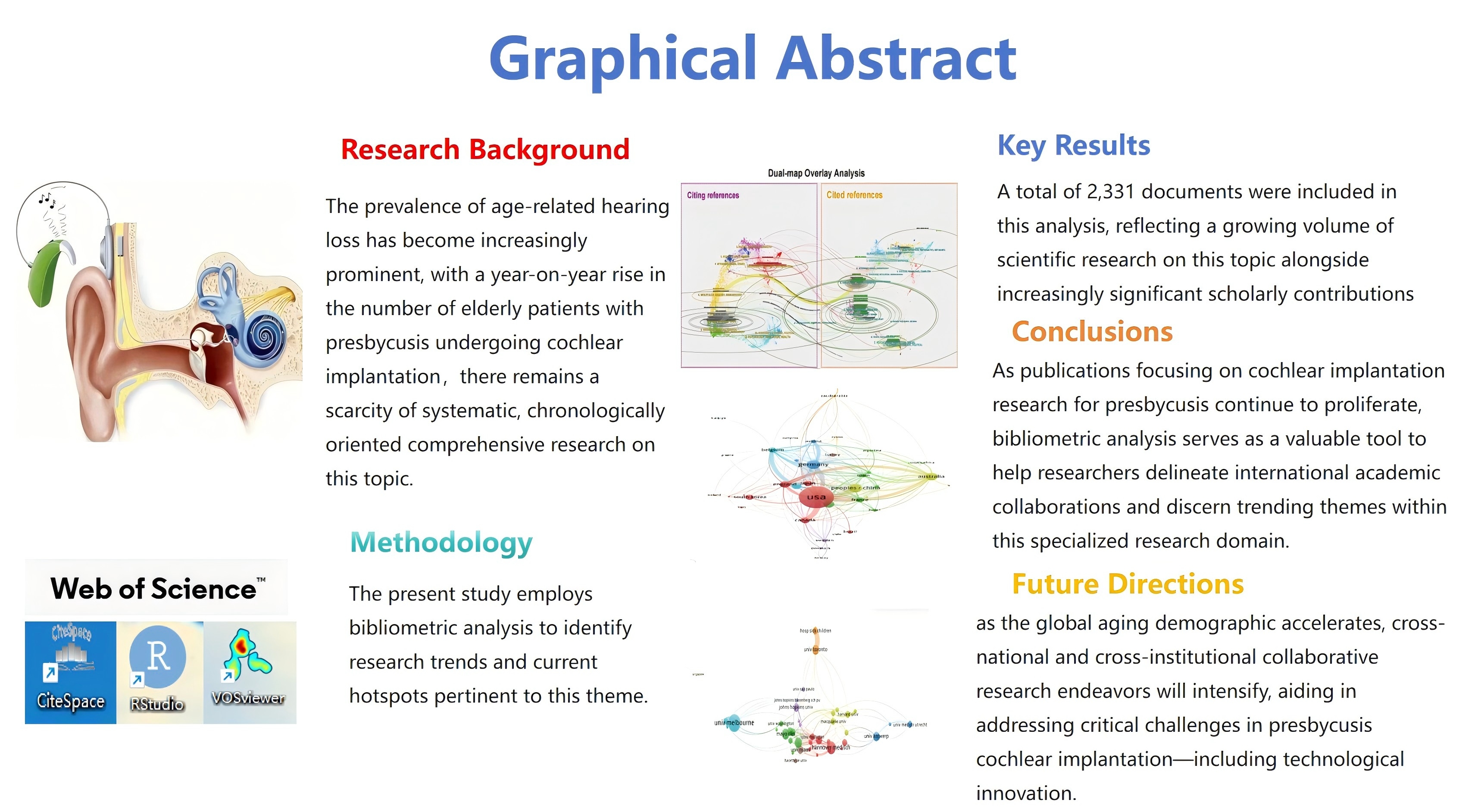
Background: The prevalence of age-related hearing loss has become increasingly prominent, with a year-on-year rise in the number of elderly patients with presbycusis undergoing cochlear implantation. Nevertheless, there remains a scarcity of systematic, chronologically oriented comprehensive research on this topic. The present study employs bibliometric analysis to identify research trends and current hotspots pertinent to this theme.
Methods: Relevant studies on cochlear implantation for presbycusis indexed in the Web of Science Core Collection database were retrieved, covering the period from January 1, 2005, to December 31, 2024. Employing bibliometric tools including Vosviewer, CiteSpace, and Bibliometrix R, systematic bibliometric statistical and visual analyses were conducted on the included research literature.
Results: A total of 2,331 documents were included in this analysis, reflecting a growing volume of scientific research on this topic alongside increasingly significant scholarly contributions. The United States maintains a leading position with 759 publications, while the University of Toronto System tops institutional rankings with 173 publications. At the author level, CARLSON MATTHEW L. leads with 40 publications, and MOBERLY AARON C. exhibits notable growth potential. In terms of research evolution, the field has progressively shifted from early investigations into etiological mechanisms toward a focus on clinical phenotypes, intervention strategies, and prognostic evaluation.
Conclusions: As publications focusing on cochlear implantation research for presbycusis continue to proliferate, bibliometric analysis serves as a valuable tool to help researchers delineate international academic collaborations and discern trending themes within this specialized research domain.
Keywords: Presbycusis;age-related hearing loss; Cochlear implantation; Bibliometrics; Data visualization
Introduction
Presbycusis, also referred to as age-related hearing loss (ARHL), is primarily characterized by bilateral, progressive, and symmetric high-frequency hearing impairment. It may also be accompanied by tinnitus and difficulties in speech recognition[1]. With the advancement of socioeconomic development and the continuous extension of average human lifespan, the issue of population aging has intensified, and the prevalence of hearing loss among older adults has become progressively prominent. According to statistics from the World Health Organization (WHO), hearing loss has emerged as the third leading cause of disability in the elderly worldwide[2].Presbycusis induces alterations in cognitive load and structural function of the brain. It not only impairs auditory perception but also precipitates a range of difficulties in daily communication and social interactions, resulting in reduced social participation. This, in turn, contributes to cognitive decline and dementia in older adults. Moreover, common comorbidities in the elderly—such as cardiovascular and cerebrovascular diseases—further exacerbate this progressive process[3].Cochlear implantation is an effective therapeutic modality for patients with severe or profound sensorineural hearing loss. These patients tpicaiiy derive little to no benefit from hearing aids or experience suboptimal outcomes with such devices[4-6].As cochlear implantation continues to gain widespread adoption, the number of presbycusis patients undergoing this procedure has been increasing year by year[7].Accordingly, tracking research hotspots in cochlear implantation for presbycusis patients holds particular significance for predicting disease progression and optimizing patient prognosis.
Bibliometric analysis, as a data-intensive and robust approach for evaluating high-quality literature. It constructs a quantitative research paradigm for disciplinary exploration by applying mathematical and statistical techniques. It has the capacity to synthesize disparate transient research frontiers within a given field into a cohesive knowledge evolution roadmap, presented in an interactive and visual format to vividly elucidate the domain's intellectual landscape and emerging research trajectories[8-10]. However, there is a conspicuous paucity of bibliometric investigations specifically centered on presbycusis. To address this gap, the current study employs key bibliometric tools (Vosviewer, CiteSpace, and the Bibliometric R package) and Web of Science Core Collection data to pursue three specific objectives:(1)Analyze the spatiotemporal distribution of presbycusis cochlear implantation research (2005–2024), including tracking annual publication trends, comparing country/region output, and summarizing core institution/author characteristics.(2)Identify key research entities and hotspots: map country/institution/author collaboration networks to pinpoint leading contributors, and analyze keyword co-occurrence to clarify focus areas (e.g., cochlear implantation efficacy, cognitive impact, elderly rehabilitation).(3)Delineate theme evolution and frontier trends: via keyword citation burst analysis, trace temporal shifts in research focus (e.g., from basic mechanisms to clinical applications) and identify emerging topics for future studies.A comprehensive set of bibliometric statistical and visual analyses was conducted on the corpus to achieve these goals. Ultimately, this study aims to provide a data-driven foundation for understanding the current state of presbycusis cochlear implantation research and offer practical guidance for future clinical research and decision-making.
Materials and methods
Data collectionGiven the strengths of the Web of Science Core Collection (WoSCC)—which offers robust functionality and high-quality data—this study Used the WOSCC for literature analysis[11, 12]. The Web of Science database was chosen owing to its comprehensive coverage of high-caliber, peer-reviewed research, encompassing a diverse array of journals across multiple disciplines[13].The Web of Science Core Collection (WoSCC) provides a more comprehensive range of citation data, which is critical for further enhancing the rigor of bibliometric analyses[14]. Relevant literature on cochlear implantation in presbycusis was retrieved from the core databases of Web of Science (WoS), including the Science Citation Index Expanded (SCIE), Social Sciences Citation Index (SSCI), and Emerging Sources Citation Index (ESCI).We, therefore, searched the database with the following search strategy:TS=((presbycusis OR presbyacusis OR "age related hearing loss" OR "age induced hearing loss" OR "ARHL" OR "age-related hearing loss" OR "elderly hearing loss" OR "senile deafness"OR "sensorineural hearing loss")OR(("hearing impairment" OR "hearing loss" OR "hearing disorder" OR deaf OR deafness) AND ("old* people" OR "old* adult*" OR "the aged" OR "elderly people" OR "senior citizen*" OR "elderly"))) AND ("cochlear implant*" OR "cochlear prosthes*" OR “cochlear implantation”OR "bionic ear" OR "artificial cochlea" OR "CI device*" OR "electric acoustic stimulation" OR EAS OR "hybrid cochlear implant*" OR "auditory prosthes*" OR“cochlear implant surgery” OR “implantable cochlear device*”).In this study, the search timeframe was configured from January 1, 2005, to December 31, 2024, with the document type restricted to "Article" and the language limited to "English".
The bibliometric analysis tools used in this study include the BiblioMetrix R package, Vosviewer, and Citespace. Specifically, the BiblioMetrix R package was primarily used for quantitative analysis to evaluate and visualize various indicators, such as the distribution patterns of countries/regions and institutions, journal development trends, and author impact[15]. Vosviewer serves as a robust tool for co-occurrence analysis and collaborative network analysis;in particular, it was applied to reveal collaborative relationships among authors, countries, and institutions, as well as to elucidate the associations between various keywords[16]. Citespace, meanwhile, is a powerful tool for citation analysis and visualization, through which keywords exhibiting significant citation burst characteristics within the specified period were identified[17]. Relevant parameters were configured to cover time slices spanning from 2005 to 2024, with each slice representing a single year.
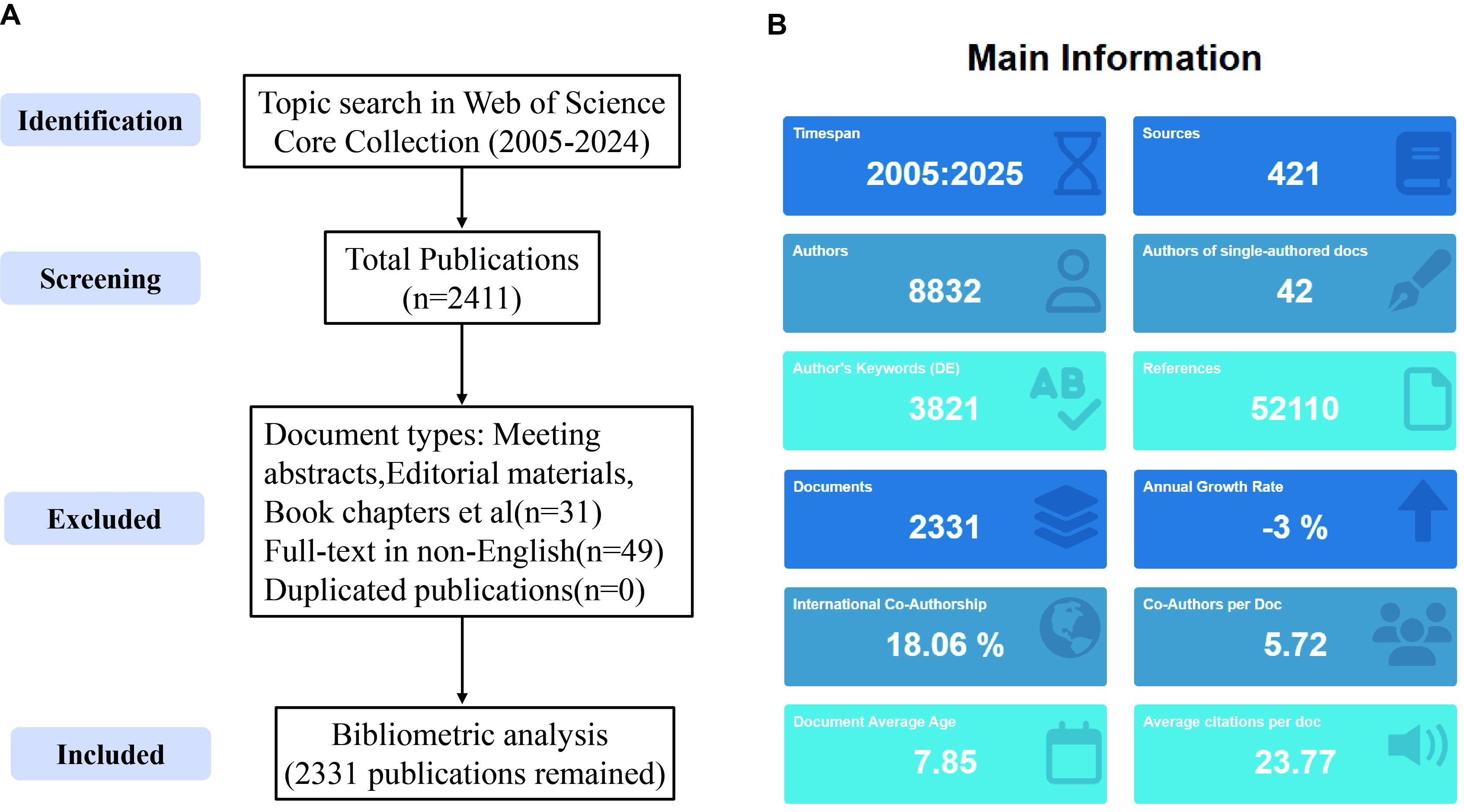
A topic-specific search was conducted using the aforementioned keywords to retrieve literature on cochlear implantation for age-related hearing loss published between 2005 and 2024.The keyword selection was designed to ensure comprehensive coverage of the research domain: it included (1) disease-specific terms for age-related hearing loss (e.g., "presbycusis," "ARHL," "senile deafness") to capture studies explicitly focusing on the condition; (2) population descriptors (e.g., "elderly people," "senior citizens") to include research that targets older adults with hearing loss but does not use "presbycusis" terminology; (3) intervention-related terms (e.g., "cochlear implant," "electric acoustic stimulation") to cover all major cochlear implantation technologies. This multi-dimensional keyword framework minimizes the risk of missing relevant studies due to terminology differences. The temporal scope was determined based on preliminary search results and practical research context: First, The volume of relevant literature from the early period is relatively limited, which not only lacks statistical representativeness but also fails to capture the mainstream research trends in this field. From a clinical technology perspective, cochlear implantation for elderly patients remained in the exploratory phase prior to 2005. It was only in the subsequent years that, driven by advancements in minimally invasive surgical techniques and the release of implant models tailored to the elderly population, research on this topic saw a marked increase. Consequently, excluding pre-2005 literature enables the analysis to focus on the mature, representative stage of research development—all while preserving the comprehensiveness of the study. To minimize errors arising from database updates, all data were downloaded on July 26, 2025. Duplicate records were excluded, and only English-language documents classified as "Articles" were included, with reviews, letters, and conference abstracts excluded from the analysis. Complete records and references were exported in "plain text" format for subsequent analytical procedures. The detailed analytical workflow is illustrated in Figure 1A.
Figure 1. Study selection and bibliometric dataset overview. (A) PRISMA-style flow diagram of record identification and screening in the Web of Science Core Collection (WoSCC). The topic search (2005–2024; retrieved in 2025) yielded 2,411 records. After excluding non-article document types (meeting abstracts, editorials, book chapters and others; n = 31), non-English full texts (n = 49), and duplicates (n = 0), 2,331 publications were included for bibliometric analyses. (B) “Main Information” summary generated by Bibliometrix for the final dataset: 421 sources and 2,331 documents authored by 8,832 authors (42 single-authored papers), 3,821 author keywords (DE), and 52,110 references. Collaboration and impact indicators included an average of 5.72 co-authors per document, 18.06% international co-authorship, average document age of 7.85 years, average 23.77 citations per document, and an overall annual growth rate of −3%. Abbreviations: WoSCC, Web of Science Core Collection; DE, author keywords.
Results
An overview of publicationsFigure 1B presents a comprehensive overview of research trends in cochlear implantation among patients with presbycusis. A total of 2,331 articles were published between 2005 and 2024, involving 8,832 authors. Notably, 18.06% of these publications had international co-authors, underscoring the extent of global collaborative efforts in this field. On average, 5.72 researchers contributed to each article,highlighting the inherently collaborative nature of research in this domain. The cumulative number of references across all included studies reached 52,110, reflecting the extensive citation and cross-citation patterns within the literature. With an average document age of 7.85 years, the majority of research in this domain remains relatively recent.
As illustrated in the following figures, the volume of relevant publications has exhibited a sustained upward trend since 2005. Over the past two decades, the overall growth trajectory has remained ascending despite periodic fluctuations.Figure 2A, a bar chart, visually depicts both the annual article output and cumulative article count across years. A pronounced stepwise increase in cumulative publications is evident over time, effectively reflecting the continuous accumulation and steady expansion of research achievements within this domain.Figure 2B, a line graph, focuses on annual variations in publication numbers. As observed, while yearly article counts display modest fluctuations, the overarching trend remains distinctly upward. A regression fit equation is included in the figure, with a high R² value of 0.9596, indicating excellent model fitting and further validating the stability and reliability of the growth pattern.Notably, the cumulative number of publications in this field has accelerated markedly since 2015, signifying the expanding scope and growing academic attention to related research endeavors. Most prominently, publication numbers reached a peak in 2024, marking a landmark year of heightened research activity in the field. This surge not only underscores the intensified research enthusiasm among scholars but also highlights that "cochlear implantation for elderly patients with presbycusis" has emerged as a critical focus of contemporary scientific inquiry, with its clinical relevance and academic significance gaining increasing recognition within the scientific community.
Figure 2. Annual and cumulative publication trends (2005–2024). (A) Yearly articles (orange) and cumulative totals (blue) from WoSCC; the corpus reached 2,331 records by 2024 (217 in 2024). (B) Annual output with a third-order polynomial fit (y = −0.018x³ + 0.7668x² + 0.1719x + 44.289; R² = 0.9596), indicating a strong upward trend.
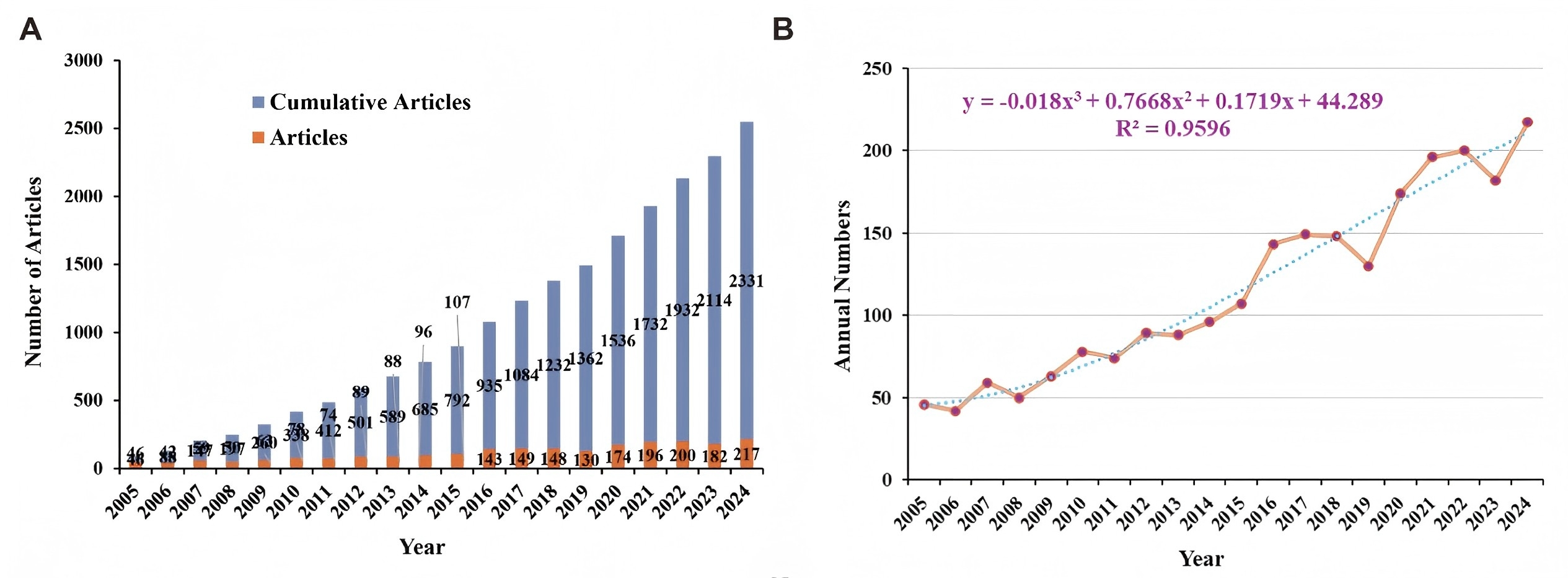
Table 1 presents a bibliometric analysis of cochlear implantation in elderly patients with presbycusis, delineating the contributions of the top 10 contributing countries in this research domain. The United States occupies the leading position with 759 publications, accounting for 32.6% of the total output, followed by China in second place with 188 publications (8.1%) and Germany in third with 163 publications (7%). These figures underscore the substantial research influence exerted by these nations in the field. In terms of collaboration patterns, the United States maintains a prominent role, leading with 668 single-country publications (SCP) and also ranking first with 91 multi-country publications (MCP).
Table 1. Top 10 Countries by Publication Output in Research.
| Country | Articles | Articles% | SCP | MCP | MCP % |
|---|---|---|---|---|---|
| USA | 759 | 32.6 | 668 | 91 | 12 |
| CHINA | 188 | 8.1 | 153 | 35 | 18.6 |
| GERMANY | 163 | 7 | 131 | 32 | 19.6 |
| AUSTRALIA | 124 | 5.3 | 86 | 38 | 30.6 |
| ITALY | 123 | 5.3 | 108 | 15 | 12.2 |
| UNITED KINGDOM | 95 | 4.1 | 69 | 26 | 27.4 |
| NETHERLANDS | 89 | 3.8 | 62 | 27 | 30.3 |
| KOREA | 87 | 3.7 | 80 | 7 | 8 |
| JAPAN | 85 | 3.6 | 82 | 3 | 3.5 |
| CANADA | 81 | 3.5 | 56 | 25 | 30.9 |
Figure 3A illustrates the international collaboration patterns in the research field of cochlear implantation for elderly patients with presbycusis. The visualization map, generated using Vosviewer, depicts these collaborative patterns. In the map, nodes correspond to individual countries, with node size proportional to the number of publications originating from each country. Links between nodes denote co-authorship collaborations, where link thickness quantifies the strength of such partnerships—thicker links indicate more intensive academic cooperation between connected countries. Colors are used to differentiate distinct research clusters, facilitating the identification of collaborative communities within the network. Additionally, the total link strength in the collaboration network serves as a metric to measure the frequency of cross-country co-authorship interactions, thereby reflecting the overall level of collaborative research activity in the field.Figure 3A specifically highlights 46 countries with a publication output of at least 11 articles. The United States, China, and Australia emerge as prominent contributors, underscoring their pivotal roles in advancing global research outcomes. Notably, robust collaborative ties exist between the United States, China, Canada, Australia, and other nations. This global collaborative network vividly reflects the international reach and inherently cooperative essence of research in the field of cochlear implantation for elderly patients with presbycusis.
Figure 3. Collaboration networks of countries, institutions, and authors (VOSviewer). (A) Country co-authorship network. Node size indicates publication output; edge thickness indicates collaboration strength; colors denote clusters. (B) Institution co-authorship network with the same visual encodings. (C) Author co-authorship network; node size indicates output and edges indicate co-authorship strength.
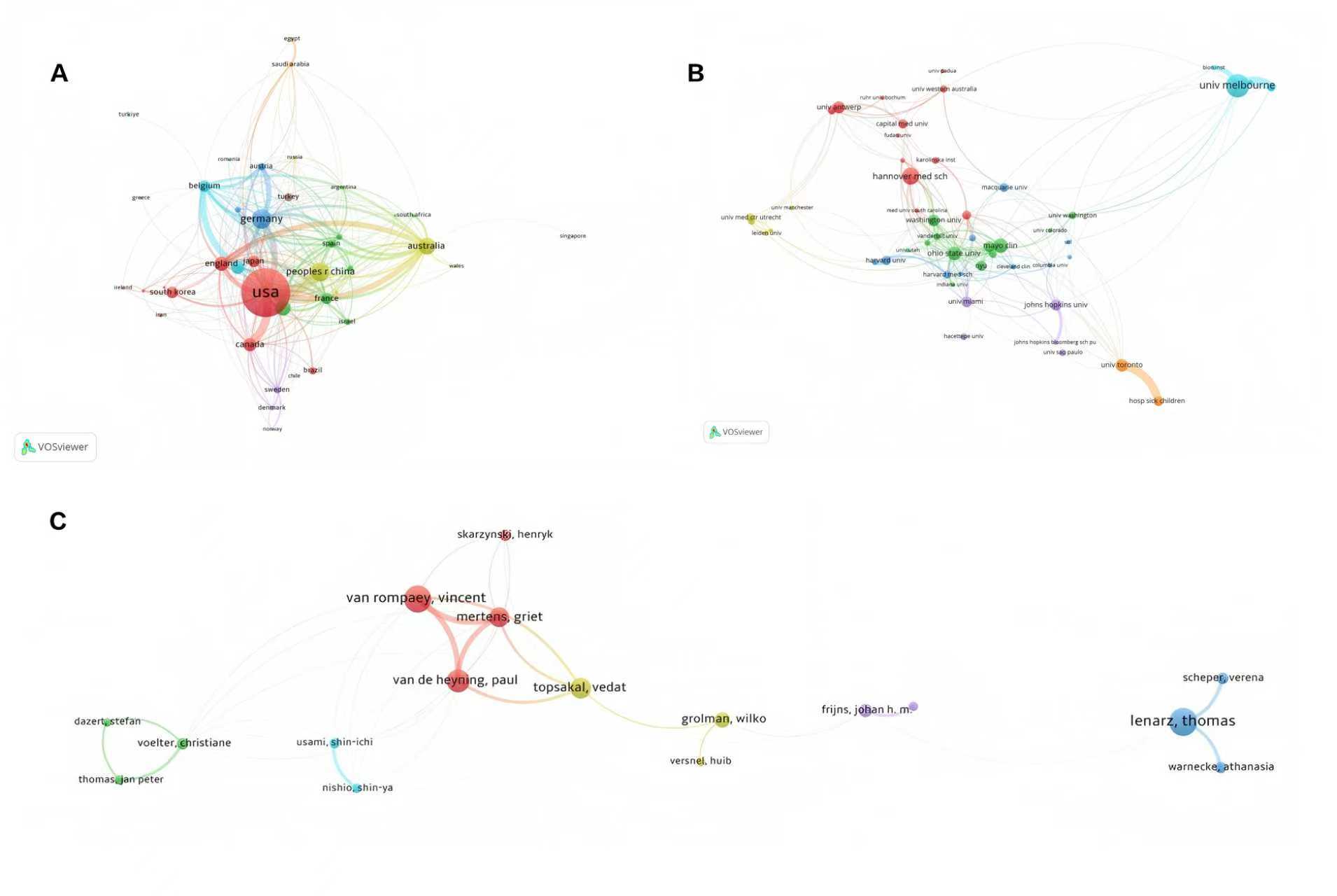
Table 2 presents the top 10 institutions contributing to research on cochlear implantation for presbycusis. The University of Toronto System ranks first with 173 publications, followed by Harvard University (142 publications) and the Johns Hopkins University System (125 publications), underscoring their pivotal roles in driving advancements in this field. Derived from an analysis of 2,269 relevant institutions worldwide, Figure 3B visualizes the collaborative network among institutions engaged in research on cochlear implantation for elderly patients with presbycusis. This figure highlights 51 institutions that have published at least 15 articles in the field. Total link strength, which quantifies the frequency of co-authorship, provides valuable insights into the level of international collaboration in research on cochlear implantation for elderly patients with presbycusis.
Table 2. Top 10 institutions by Publication Output in Research.
| Affiliation | Articles |
|---|---|
| UNIVERSITY OF TORONTO | 173 |
| HARVARD UNIVERSITY | 142 |
| JOHNS HOPKINS UNIVERSITY | 125 |
| UNIVERSITY OF ANTWERP | 114 |
| UNIVERSITY OF MELBOURNE | 112 |
| UNIVERSITY SYSTEM OF OHIO MAYO CLINIC | 102 |
| HANNOVER MEDICAL SCHOOL | 100 |
| SEOUL NATIONAL UNIVERSITY (SNU) | 93 |
| HARVARD UNIVERSITY MEDICAL AFFILIATES | 88 |
This study identified a total of 31,909 authors who have contributed to research on cochlear implantation for elderly patients with presbycusis. Table 3 presents detailed profiles of the top 10 most impactful authors in this domain. CARLSON MATTHEW L. leads with 40 publications, closely followed by LENARZ THOMAS with 38 publications. Together, they constitute the "core high-productivity cohort" in the field, reflecting their sustained research output in presbycusis cochlear implantation and confirming their status as the most active contributors.SHEPHERD ROBERT K. ranks first with an h-index of 21, indicating that 21 of his core publications have each accumulated at least 21 citations. As a dual leader in both "high productivity and high impact" within the field, he has solidified his position as an academic authority. Notably, MOBERLY AARON C. demonstrates robust growth potential through his high m-index, emerging as a promising scholar warranting sustained attention in future research endeavors.
Table 3. Top 10 most impactful authors.
| Author | h_index | g_index | m_index | TC | NP | PY_start |
|---|---|---|---|---|---|---|
| SHEPHERD ROBERT K. | 21 | 28 | 1.05 | 1435 | 28 | 2006 |
| CARLSON MATTHEW L. | 18 | 35 | 1.2 | 1257 | 40 | 2011 |
| LENARZ THOMAS | 18 | 33 | 0.9 | 1135 | 38 | 2006 |
| GORDON KAREN A. | 17 | 25 | 0.895 | 949 | 25 | 2007 |
| PAPSIN BLAKE C. | 17 | 28 | 0.895 | 970 | 28 | 2007 |
| WISE ANDREW K. | 17 | 19 | 0.895 | 1100 | 19 | 2007 |
| MOBERLY AARON C. | 15 | 23 | 1.5 | 679 | 23 | 2016 |
| LIN FRANK R. | 14 | 17 | 1 | 793 | 17 | 2012 |
| BUCHMAN CRAIG A. | 13 | 24 | 0.684 | 1015 | 24 | 2007 |
| CUSHING SHARON L. | 13 | 21 | 0.722 | 679 | 21 | 2008 |
Figure 3C depicts the collaboration network among 46 authors who have each published at least 11 articles focusing on cochlear implantation in elderly patients with presbycusis. The total link strength within this network quantifies the frequency of co-authorship interactions between authors, thereby highlighting critical metrics in research collaboration dynamics. Notably, Vincent Van Rompaey, Griet Mertens, and Van de Heyning et al. emerge as leading collaborators, underscoring their pivotal role in facilitating international and interdisciplinary partnerships within this research domain.
Analysis of keywordsFigure 4A illustrates a network analysis of keyword co-occurrence. This network visualization depicts the co-occurrence patterns of keywords across the selected literature, where each node corresponds to a specific keyword and its size is proportional to the frequency of occurrence. Connections between nodes indicate co-occurrence within the same article, with thicker lines denoting stronger associative relationships. As shown in the figure, "children", "sensorineural hearing loss", and "cochlear implantation" form a tightly interconnected cluster, followed by their close associations with such keywords as "speech function", "performance", and "prognosis". The distinct interlinkage between quality of life, hearing loss, and impariment, revealed by the network analysis aligns with the growing international emphasis on the management of hearing disorders.
Figure 4. Keyword landscape and burst terms (2005–2024). (A) VOSviewer keyword co-occurrence map. Node size indicates keyword frequency; edge thickness indicates co-occurrence strength; colors denote clusters. (B) CiteSpace top-20 keywords with the strongest citation bursts. Red segments mark burst periods within 2005–2024; the left column lists burst strength and start–end years.
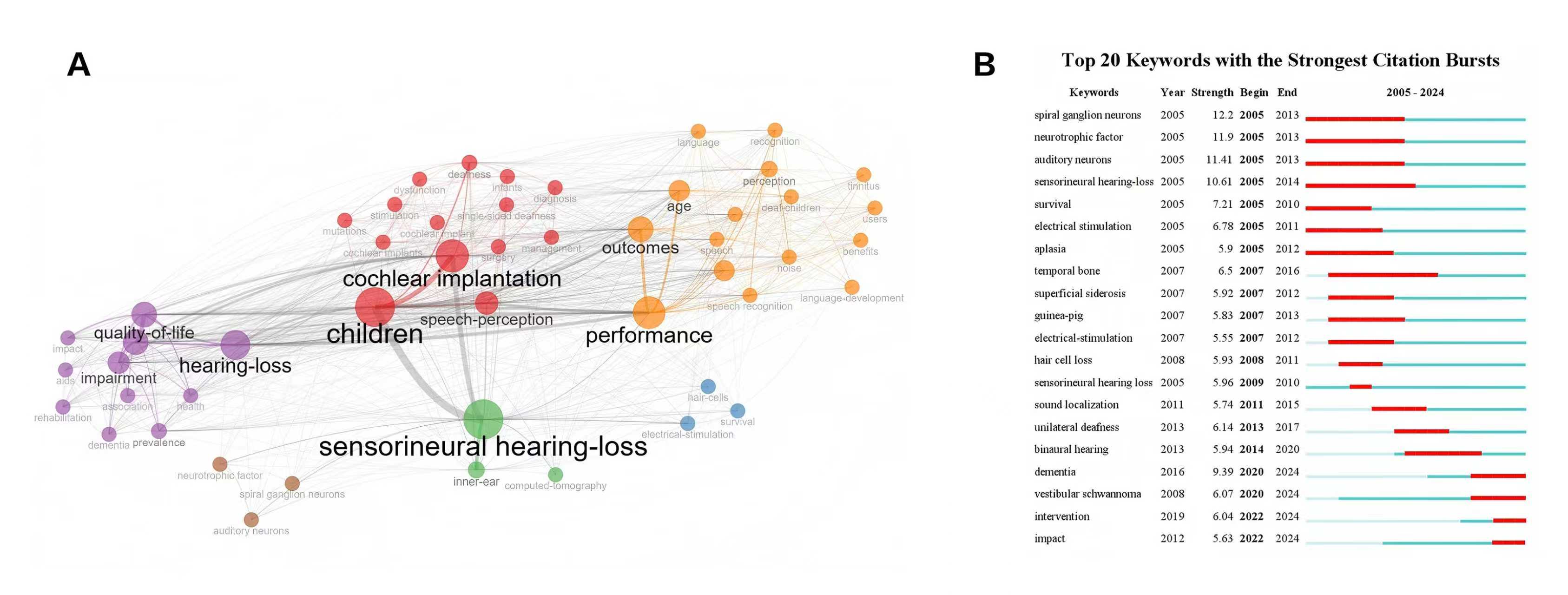
Over time, analyses of keyword citation bursts have illuminated key evolutionary trends in research priorities. The figure 4B below illustrates the dynamics of the top 20 keywords with the strongest citation bursts over the past two decades: In the early period, terms related to etiological mechanisms predominated, such as "spiral ganglion neuron" and "neurotrophic factor," whose research momentum has gradually waned. In contrast, the explosive emergence of keywords centered on themes like "dementia," "intervention," and "impact" reflects the growing academic focus on assessing clinical manifestations and prognostic outcomes. For instance, a recent multicenter study on presbycusis demonstrated that the relationship between age-related hearing loss (ARHL) and cognitive impairment (CI) remains complex[18]. Another analysis based on long-term follow-up data confirmed that investigating the potential causal links between hearing loss, neural reorganization, and cognitive impairment could inform the development of novel interventions to mitigate both hearing loss and cognitive decline[19]. These trends indicate that research addressing the clinical manifestations and therapeutic strategies for presbycusis is increasingly gaining recognition.
Figure 5A depicts the keyword co-occurrence network pertinent to this study. Different colors stand for distinct clusters, each containing a group of related keywords, which reflects the main research themes and hotspots in the field. It can be clearly observed that there are multiple key domains and hotspots in the research of presbycusis concerning cochlear implantation from 2005 to 2024. From hearing preservation and neuronal function to the enhancement of quality of life, these aspects indicate the research trend that has gradually evolved from the early exploration of etiological mechanisms to the aspects of clinical manifestations, intervention measures, and prognostic assessment.
Figure 5. Keyword clusters and conceptual structure. (A) CiteSpace keyword co-occurrence clusters (LLR labels). Node size indicates keyword frequency; links indicate co-occurrence; colors/polygons denote clusters (#0 cochlear implantation, #1 spiral ganglion neurons, #2 cochlear implant, #3 hearing loss, #4 functional connectivity, #5 hearing preservation, #6 vestibular function). (B) Bibliometrix conceptual structure map (MCA) of keywords, showing three domains: a neurobiology/stimulation cluster (blue; e.g., auditory neurons, spiral ganglion neurons, neurotrophic factor), a clinical outcomes/performance cluster (red; e.g., speech recognition, tinnitus, noise, benefits), and an epidemiology/quality-of-life cluster (green; e.g., older adults, dementia, quality-of-life, impact).
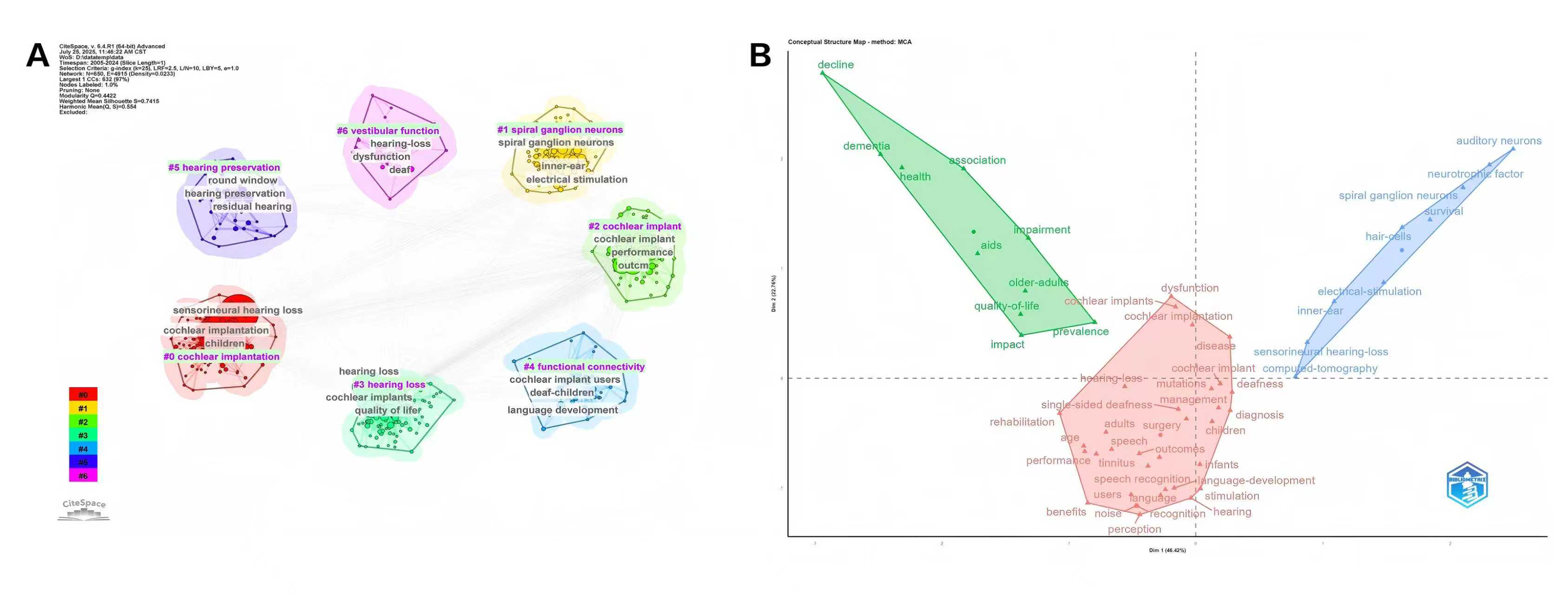
Figure 5B is a conceptual structure map generated via Multiple Correspondence Analysis (MCA), which is employed to visualize the semantic associations and conceptual clustering of keywords in the field of presbycusis research.Different colored areas in the figure represent distinct conceptual clusters, each containing a set of keywords that are closely related in terms of semantics or research topics. For instance, keywords in the green area such as "decline", "dementia", "isolation", and "health" primarily focus on the impacts of presbycusis on patients' cognition, mental health, and social life. Keywords in the red area like "cochlear implants", "rehabilitation", "outcome", and "quality-of-life" lay emphasis on research related to cochlear implant technology and its clinical applications as well as prognosis concerning the improvement of patients' quality of life. Keywords in the blue area including "auditory neurons", "neurotrophic factor", and "spiral ganglion neuron" are more involved in the neurobiological mechanism research of the auditory system.
Analysis of thematic evolution trendsFigure 6 presents a bibliometric analysis of cochlear implantation in presbycusis research from 2005 to 2024. The mulberry plot intuitively visualizes the data flow and interrelationships across different categories. In this figure, keywords (ID) are displayed on the left, authors (AU) in the middle, and countries involved in the research (AU_CO) on the right. Each keyword is connected to multiple authors via lines, indicating that these authors have published research on relevant topics. For example, "cochlear implants" is closely associated with several authors such as Lenarz, Thomas and Van Rompaey, Vincent, suggesting that these scholars have conducted in-depth research in the field of cochlear implantation. Each author is connected to one or more countries by lines, signifying that their research work is related to these countries. For instance, Lenarz, Thomas has close connections with the USA and Germany, indicating that he has made research contributions in both countries. By observing the flow direction and density of the lines, we can identify that certain keywords have strong associations among specific countries and authors. For example, "sensorineural-hearing-loss" is prominent in the research of the United States and Australia, and the main authors involved include Papsin, Blake C. and Choi, Byung Yoon. This reflects the research dynamics of specific keywords among different regions and researchers.
Figure 6. Three-fields map linking keywords–authors–countries (Bibliometrix). ID = author keywords; AU = authors; AU_CO = countries. Bar height indicates frequency; link width indicates the number of papers connecting the two nodes. Dominant topics include hearing loss, cochlear implantation, speech perception/recognition, performance, and quality-of-life. Central authors include Thomas Lenarz, Vincent Van Rompaey, Matthew L. Carlson, Paul Van de Heyning, Vedat Topsakal, and Griet Mertens; major contributing countries include the USA, Belgium, Canada, Australia, the Netherlands, Germany, and the UK.
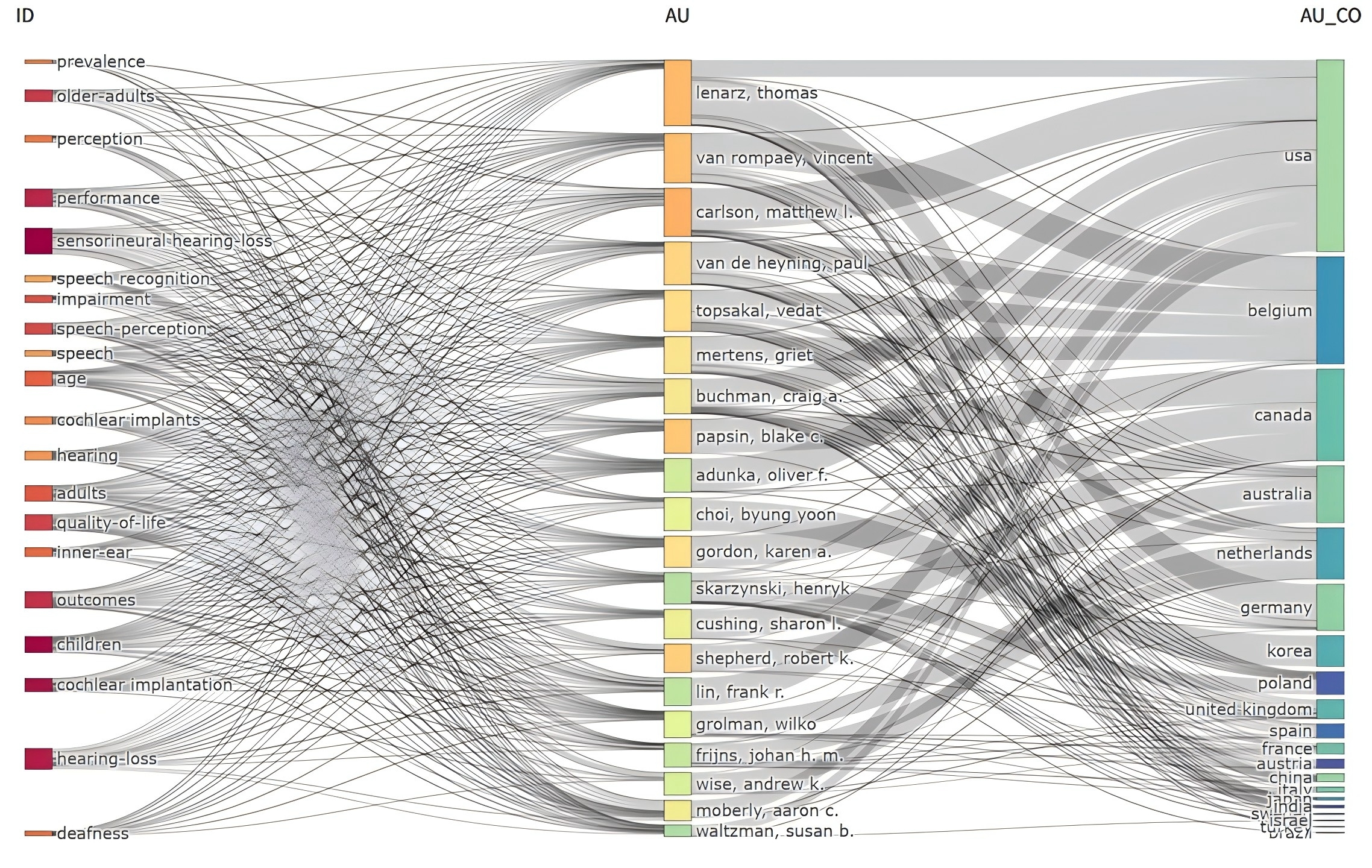
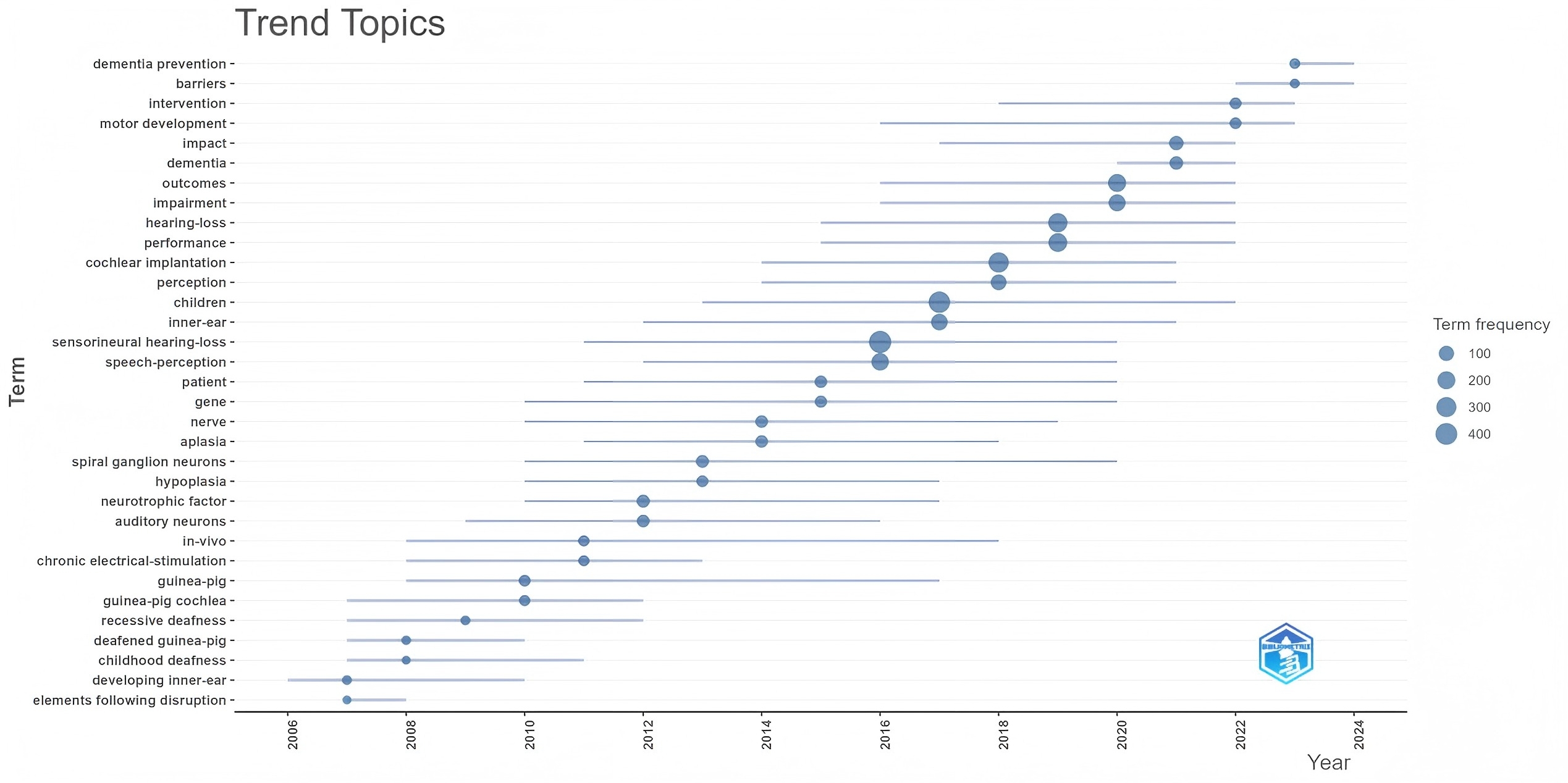
Figure 7 is a time-series chart demonstrating the trend topics in the research field, which is intended to present the variation trends and occurrence frequencies of different research topics over time. In the chart, the horizontal axis represents years, while the vertical axis stands for research topics (Terms). The blue dots on the line segments indicate the term frequency of each topic in the corresponding year, with the size of the dots being proportional to the frequency. It can be seen from the chart that topics such as "dementia prevention" and "intervention" have witnessed a gradual increase in research attention in recent years. This also suggests that with the advancement of technology, researchers are paying more and more attention to the quantitative evaluation of the efficacy of cochlear implants, especially in terms of the role of cochlear implantation in alleviating dementia in presbycusis patients[20].
Figure 7. Trend topics over time (Bibliometrix). Each row is a term. The horizontal bar shows the active period (first–last year) in which the term appears; the dot marks the peak year, and its size indicates term frequency (legend at right). Early topics (≈2005–2012) emphasize animal/basic neurobiology (e.g., guinea-pig, spiral ganglion neurons, neurotrophic factor), while later topics shift toward clinical outcomes and aging comorbidities (hearing loss/cochlear implantation, performance/outcomes, dementia, intervention, barriers).
Discussions
In academic research, bibliometric analysis has become itself as an indispensable tool for providing comprehensive overviews and accurately identifying trends and hotspots within a research domain[21]. The study uses the widely recognized Web of Science Core Collection(WoSCC) database as its source of literature data[22]. The WoSCC is known for its exceptional quality and accuracy. To analyze research content pertaining to cochlear implantation in presbycusis, quantitative analytical software—including Vosviewer, CiteSpace, R Studio, and BiblioMetrix—was utilized in this investigation[23, 24].Through analyses of spatial-temporal distribution, regional collaboration patterns, author contributions, core literature, hot topics, and research boundary delineation—complemented by keyword co-occurrence analysis—we identified emerging research themes across distinct periods and elucidated the developmental trajectory of this research domain. Furthermore, we pinpointed the most cutting-edge advancements in current research on cochlear implantation for elderly patients with presbycusis. The findings of this bibliometric analysis offer valuable insights for guiding strategies related to cochlear implantation in elderly presbycusis populations, providing a comprehensive overview of emerging trends and key research areas that can inform future research endeavors and clinical advancements in this field.
After conducting an in-depth statistical analysis of the number of publications contributed by countries or regions in the research field of cochlear implantation for presbycusis, we observed that the United States occupies a preeminent position in this domain, maintaining a substantial lead in both single-country publications (SCP) and multi-country publications (MCP).The preeminent status of the United States in this area can be attributed to its significant investments in biomedical research, well-established academic infrastructure, and extensive international collaborative networks[25].Within the global national collaboration network, nations including the United States, China, and Australia emerge as key contributors. These countries have established robust collaborative partnerships with other nations, engaging in in-depth cooperation through mechanisms such as joint research initiatives, data sharing frameworks, academic exchange programs, and multicenter clinical trials[26]. This collaborative model facilitates the integration of global resources and enhances research efficiency. Such a worldwide cooperation network vividly exemplifies the international influence of research in the field of cochlear implantation for elderly patients with presbycusis, as well as its inherently collaborative essence.
At the institutional level, the University of Toronto system ranks first with 173 publications, followed by Harvard University and the Johns Hopkins University system. This highlights the pivotal role of these institutions in advancing the field. Additionally, a collaboration network map of various institutions has been constructed. We strongly recommend that research organizations across different countries strengthen mutual cooperation and communication to further promote the development of research on cochlear implantation for presbycusis. By leveraging each other’s strengths, we aim to achieve greater breakthroughs in this field, while breaking down academic barriers to lay a more solid foundation for in-depth research on cochlear implantation in elderly patients with presbycusis.
From the perspective of author contributions, CARLSON MATTHEW L ranks as the most prolific contributor of relevant literature[27, 28], followed by LENARZ THOMAS[29]. This not only reflects their sustained scientific output in the domain of cochlear implantation for age - related hearing loss but also affirms their status as the most active contributors. SHEPHERD ROBERT K emerges as a “high - productivity and high - impact” scholar within this field[30].When considering the PY_start metric, it becomes evident that SHEPHERD ROBERT K and LENARZ THOMAS represent the senior scholars in the field. In contrast, MOBERLY AARON C, bolstered by a relatively high m - index, exhibits substantial growth potential and stands out as an emerging scholar deserving of ongoing attention in future research endeavor[31, 32]The interwoven academic trajectories of various authors have forged the research ecosystem network of this discipline. Senior scholars like SHEPHERD ROBERT K, leveraging long - term accumulations, have persistently delved into the integration of theoretical underpinnings and clinical practice, thus laying a robust foundation for the field. Highly productive authors such as CARLSON MATTHEW L and LENARZ THOMAS have expanded the research frontiers through a high - frequency output of findings, achieving successive breakthroughs in sub - areas including post - cochlear implantation rehabilitation regimens and multimodal evaluation systems. Emerging talents typified by MOBERLY AARON C have infused innovative dynamism into the field.This intergenerational succession and innovative relay have propelled research on cochlear implantation for age - related hearing loss toward greater precision, efficiency, and clinical relevance. Concurrently, it furnishes academic support for the optimization of the global hearing rehabilitation medical system. Additionally, the strong connectivity exhibited by these authors reflects their significant contributions to collaborative research efforts. It underscores the indispensable role of global cooperation in advancing cochlear implantation research for elderly presbycusis patients, illustrating how such alliances drive progress in the field.
In keyword analysis, the “keyword co - occurrence network” intuitively delineates the research structure within the domain of cochlear implantation. Centered on cochlear implantation, it extends to facets including the pathological mechanisms of hearing loss, quality - of - life outcomes, and prognostic trajectories. This reflects that technological innovation propels the enhancement of diagnostic accuracy and therapeutic efficacy, validating the pivotal role of technological advancement in facilitating the diagnosis and management of hearing impairment among the elderly. Additionally, burst citation analysis of keywords unveils the critical evolutionary trends across key research areas. More importantly, the bibliometric findings of this study are highly aligned with the critical shifts in clinical practice trends: Burst citation analysis of keywords reveals that early research was dominated by terms related to etiological mechanisms, such as "spiral ganglion neuron" and "neurotrophic factor"—a research focus that echoes the clinical need to "optimize cochlear implant design by clarifying the mechanisms of auditory nerve damage." In recent years, keywords including "dementia," "intervention," and "quality of life" have experienced explosive growth, a trend that reflects the transformation of the clinical paradigm from "merely restoring hearing function" to "pursuing comprehensive health management for elderly patients." These trends indicate that investigations into the clinical phenotypes and precision treatment strategies for presbycusis are garnering escalating recognition[33].The “conceptual clustering and cross - thematic association” offers a systematic panorama of research endeavors in the cochlear implantation sphere. Encompassing core diagnostic - therapeutic technologies, geriatric health - related concerns, and fundamental neuroscience mechanisms, it epitomizes the academic rationale that “clinical imperatives propel research expansion, while basic research reciprocally underpins clinical translation”[34].
The transformation and aggregation processes not only clarify the dynamic connections between research elements but also reveal the implicit logical thread underpinning the evolution of the field. For instance, the growing attention to “dementia prevention” and “intervention measures” reflects a shift in the research community from a narrow focus on “hearing function restoration” to an emphasis on “comprehensive health management for elderly patients”[35]. This aligns with the global healthcare demands driven by population aging[36].Simultaneously, the continuous aggregation of core authors and national research efforts around emerging themes accelerates the translation of research outcomes into clinical practice. These visualization tools thus serve not only as a retrospective summary of past research but also as a guide for identifying future priorities and potential collaboration avenues. Such systematic representation enables stakeholders—including researchers, clinicians, and policymakers—to gain a holistic understanding of the current research landscape. It further facilitates more strategic allocation of resources to address critical challenges in cochlear implantation for presbycusis, ultimately advancing both scientific inquiry and clinical impact in this specialized domain.
Limitations
The study has three primary limitations. First, data retrieval was limited to Web of Science; data from PubMed, Embase, and Scopus were not included. Notably, integrating data from multiple sources would require more sophisticated analytical methods, which presented practical constraints in the present study. Second, the search strategy may have inherent imperfections, potentially limiting the comprehensiveness of literature coverage. Third, researchers from China frequently publish their work in Chinese-language journals, which are not fully indexed in the selected databases. The omission introduces two distinct biases: in geographic analysis, single-center studies on cochlear implantation in elderly patients conducted by Chinese clinical institutions and containing valuable data such as surgical outcomes are excluded from the dataset, potentially underestimating these institutions’ actual contributions to clinical research in the field. Additionally, in institutional collaboration analysis, Sino-international collaborative studies that are published in Chinese journals are not captured, which weakens the perceived collaborative ties between Chinese and international institutions and undermines the accuracy of the institutional collaboration network map. While this limitation cannot be fully addressed with the current dataset, future analyses could integrate Chinese academic databases to supplement non-English literature, thereby mitigating regional publication bias.
Conclusion
This study is the first bibliometric analysis of literature on cochlear implantation for presbycusis over the past two decades. Using visual analytics techniques, we systematically assessed research progress, accurately identified emerging research hotspots, and proposed future research directions . The current analytical findings reveal that the United States remains at the forefront of research in this domain, with its academic institutions and scholars playing a pivotal leadership role in driving advancements within the field. Over the past twenty years, developing nations, exemplified by China, have steadily increased research investment in this area, accompanied by gradual enhancements in their research capacity.Looking forward, we propose three specific directions for future research to address existing gaps and meet clinical needs: First, explore cognitive-auditory interaction mechanisms by conducting well-designed longitudinal cohort studies to quantify the causal relationship between cochlear implantation outcomes and cognitive changes in presbycusis patients, with cognition assessed via standardized scales and objective neuroimaging for comprehensive, accurate evaluation; second, advance personalized implantation protocols by establishing a risk stratification model for elderly candidates—integrating comorbidities, residual hearing, and baseline cognition—to optimize surgical timing and device selection; third, promote global equity in cochlear implantation access by conducting cross-sectional surveys in low- and middle-income countries (LMICs) to identify region-specific barriers and collaborating with local partners to develop tailored solutions to reduce access disparities.Concurrently, as the global aging demographic accelerates, cross-national and cross-institutional collaborative research endeavors will intensify, aiding in addressing critical challenges in presbycusis cochlear implantation—including technological innovation, efficacy assessment, and equitable access to applications. This will ultimately provide more robust academic underpinnings to enhance the quality of life for elderly individuals with hearing impairment.
Abbreviations
SCIE, Science Citation In-dex Expanded; SSCI, Social Sciences Citation Index; ESCI, Emerging Sources Citation Index; ARHL, Age-Related Hearing Loss; EAS, Electric Acoustic Stimulation; CP, Same Country Partnership; MCP, Multiple Country Part-nership; h_index, hirsch index; TC, Total Citations; NP, Number of Publications; PY_start, Publication Year Start; CI, Cognitive Impairment; MCA, Multiple Correspondence Analysis; LMICs, Low and Middle-Income Countries.
Declarations
Author Contributions
Liuqing Zhang designed the study, collected and analyzed the data, and drafted the manuscript. Guoying Han translated the manuscript. Yuxiang Wang and Deshang Chen jointly assisted in data analysis. Corresponding author Yuefeng Han super-vised the completion of the study and reviewed the manu-script. All authors read and approved the final manuscript.
Acknowledgements
Not Applicable.
Funding information
Not Applicable.
Ethics Approval and Consent to Participate
Not Applicable.
Competing Interests
The authors declare that they have no existing or potential commercial or financial relationships that could create a conflict of interest at the time of conducting this study.
Data availability
Not Applicable.
References
 Figures
 References
 Peer
Peer Information
Figure 1. Study selection and bibliometric dataset overview. (A) PRISMA-style flow diagram of record identification and screening in the Web of Science Core Collection (WoSCC). The topic search (2005–2024; retrieved in 2025) yielded 2,411 records. After excluding non-article document types (meeting abstracts, editorials, book chapters and others; n = 31), non-English full texts (n = 49), and duplicates (n = 0), 2,331 publications were included for bibliometric analyses. (B) “Main Information” summary generated by Bibliometrix for the final dataset: 421 sources and 2,331 documents authored by 8,832 authors (42 single-authored papers), 3,821 author keywords (DE), and 52,110 references. Collaboration and impact indicators included an average of 5.72 co-authors per document, 18.06% international co-authorship, average document age of 7.85 years, average 23.77 citations per document, and an overall annual growth rate of −3%. Abbreviations: WoSCC, Web of Science Core Collection; DE, author keywords.
Figure 2. Annual and cumulative publication trends (2005–2024). (A) Yearly articles (orange) and cumulative totals (blue) from WoSCC; the corpus reached 2,331 records by 2024 (217 in 2024). (B) Annual output with a third-order polynomial fit (y = −0.018x³ + 0.7668x² + 0.1719x + 44.289; R² = 0.9596), indicating a strong upward trend.
Figure 3. Collaboration networks of countries, institutions, and authors (VOSviewer). (A) Country co-authorship network. Node size indicates publication output; edge thickness indicates collaboration strength; colors denote clusters. (B) Institution co-authorship network with the same visual encodings. (C) Author co-authorship network; node size indicates output and edges indicate co-authorship strength.
Figure 4. Keyword landscape and burst terms (2005–2024). (A) VOSviewer keyword co-occurrence map. Node size indicates keyword frequency; edge thickness indicates co-occurrence strength; colors denote clusters. (B) CiteSpace top-20 keywords with the strongest citation bursts. Red segments mark burst periods within 2005–2024; the left column lists burst strength and start–end years.
Figure 5. Keyword clusters and conceptual structure. (A) CiteSpace keyword co-occurrence clusters (LLR labels). Node size indicates keyword frequency; links indicate co-occurrence; colors/polygons denote clusters (#0 cochlear implantation, #1 spiral ganglion neurons, #2 cochlear implant, #3 hearing loss, #4 functional connectivity, #5 hearing preservation, #6 vestibular function). (B) Bibliometrix conceptual structure map (MCA) of keywords, showing three domains: a neurobiology/stimulation cluster (blue; e.g., auditory neurons, spiral ganglion neurons, neurotrophic factor), a clinical outcomes/performance cluster (red; e.g., speech recognition, tinnitus, noise, benefits), and an epidemiology/quality-of-life cluster (green; e.g., older adults, dementia, quality-of-life, impact).
Figure 6. Three-fields map linking keywords–authors–countries (Bibliometrix). ID = author keywords; AU = authors; AU_CO = countries. Bar height indicates frequency; link width indicates the number of papers connecting the two nodes. Dominant topics include hearing loss, cochlear implantation, speech perception/recognition, performance, and quality-of-life. Central authors include Thomas Lenarz, Vincent Van Rompaey, Matthew L. Carlson, Paul Van de Heyning, Vedat Topsakal, and Griet Mertens; major contributing countries include the USA, Belgium, Canada, Australia, the Netherlands, Germany, and the UK.
Figure 7. Trend topics over time (Bibliometrix). Each row is a term. The horizontal bar shows the active period (first–last year) in which the term appears; the dot marks the peak year, and its size indicates term frequency (legend at right). Early topics (≈2005–2012) emphasize animal/basic neurobiology (e.g., guinea-pig, spiral ganglion neurons, neurotrophic factor), while later topics shift toward clinical outcomes and aging comorbidities (hearing loss/cochlear implantation, performance/outcomes, dementia, intervention, barriers).
[25] Fineberg HV. Toward a New Social Compact for Health Research. JAMA. 2013;310:1923–4.
[27] Cochlear Implantation in Adults. New England Journal of Medicine. 2020;383:e33.
Peer-review Terminology
Identity transparency: Single anonymized
Reviewer interacts with: Editor
Details
This is an open access article under the terms of the Creative Commons Attribution License(http://creativecommons.org/licenses/by/4.0/), which permits use, distribution and reproduction in any medium, provided the original work is properly cited.
Publication History
Received 2025-08-18
Accepted 2025-08-29
Published 2025-09-11